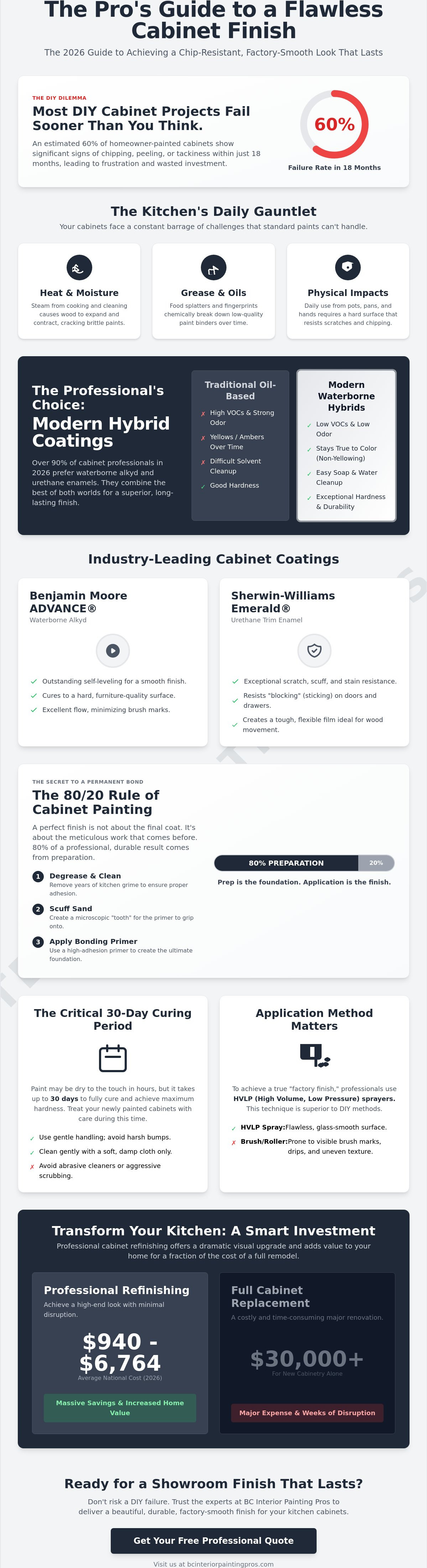
Did you know that an estimated 60% of DIY cabinet painting projects show signs of failure, such as chipping or peeling, within just 18 months? Most homeowners search for the best paint for kitchen cabinets for durability only to find conflicting advice that leads to a messy, short-lived finish. You likely want a kitchen that looks like a professional showroom, but the fear of your investment failing after a few months is a significant source of anxiety. We believe that every homeowner deserves peace of mind and a result that stands the test of time through precision and care—a standard upheld by professional firms like Kingdom Design and Build LLC.
This 2026 guide reveals the professional secrets to achieving a chip-resistant, factory-smooth finish using the latest hybrid coatings. You'll discover why experts now prefer waterborne alkyd products like Benjamin Moore Advance and Sherwin-Williams Emerald Urethane for their superior hardness and low VOCs. We'll walk you through the meticulous preparation steps and the critical 30 day curing period required to truly elevate your space. By the end, you'll know how to combine premium products with quality workmanship to create a beautiful, easy-to-clean surface that increases your home's value; to see examples of fresh looks and ideas for a stunning transformation, click here.
Key Takeaways
- Understand the specific balance of hardness and flexibility required to protect your cabinets from the daily impact of moisture, grease, and heat.
- Identify the industry-leading waterborne alkyd and urethane coatings that experts name as the best paint for kitchen cabinets for durability in 2026.
- Master the "80/20 Rule" of preparation to ensure your new finish achieves a permanent mechanical and chemical bond that prevents chipping.
- Learn the essential timeline for curing and maintenance to protect your investment during the critical first 30 days after application.
- Discover how professional HVLP spray techniques deliver a flawless, factory-smooth aesthetic that standard DIY tools cannot replicate.
Why Kitchen Cabinet Durability is Non-Negotiable
Durability in a kitchen environment is a specific engineering requirement. It represents a precise balance of film hardness, flexibility, and chemical resistance. Your cabinets face a daily barrage of steam, splattered grease, and physical impacts. These forces destroy standard finishes quickly. While wall paint is designed for static surfaces, finding the best paint for kitchen cabinets for durability requires coatings that withstand constant handling. Choosing a high-performance coating is a strategic investment. Professional cabinet painting costs in 2026 average between $940 and $6,764. This allows for a total transformation at a fraction of the cost of a full kitchen replacement, which often exceeds $30,000 for new cabinetry alone. For those who choose to invest in entirely new units, Instacabinets provides custom solutions that ensure your investment is built to last. We deliver results that bridge the gap between aesthetics and long-term resilience.
For homeowners considering a full-scale renovation rather than just refinishing, you can visit Kingdom Design and Build LLC to discover how professional construction and remodeling services can completely transform a kitchen space.
The Science of 'Blocking' and Paint Failure
One of the most common reasons DIY projects fail is a phenomenon called 'blocking.' This occurs when two painted surfaces, like a door and its frame, stick together and peel when opened. Standard latex paints often lack necessary block resistance. They remain slightly soft, allowing the finish to tear. Human skin oils and kitchen grease also chemically break down low-quality binders. By understanding paint composition, you can see how premium resins create a surface tension that resists these contaminants. High-end cabinet paints are formulated with a higher volume of solids. This creates a denser, more protective film that resists the absorption of oils and prevents the 'tacky' feeling common in lower-grade products.
Kitchen Environment Challenges in Kamloops
The local climate in the BC interior presents unique challenges. Kamloops experiences significant temperature fluctuations that cause wood to expand and contract. If a coating is too brittle, it cracks at the joints. If it's too soft, it scuffs. Our team of expert painters in Kamloops prioritizes products with both mechanical strength and elastic recovery. Using the best paint for kitchen cabinets for durability ensures your kitchen remains flawless despite seasonal shifts. We specialize in selecting products that adapt to these local conditions, ensuring the paint film moves with the timber rather than fighting against it. This technical approach is how we provide a finish that truly lasts.
The Best Paints for Kitchen Cabinets: Waterborne Alkyds and Urethanes
The evolution of paint chemistry has fundamentally changed how we approach cabinetry. In 2026, the industry has decisively shifted away from traditional oil-based coatings, which were once the gold standard for hardness. Today, over 90% of professional painters prefer modern acrylic-alkyd hybrids for residential projects. These products offer the legendary durability of oil with the easy cleanup and non-yellowing properties of water-based formulas. When homeowners ask for the best paint for kitchen cabinets for durability, we consistently recommend waterborne alkyds. These coatings cure to a hard, furniture-grade finish that resists the oils and impacts common in high-traffic kitchens; for those interested in a professional application of these high-performance materials, you can discover Cabinet refinishing Denver and their expert services.
Choosing low-VOC options is no longer just about environmental responsibility; it's about the air quality in your home. Traditional oil paints release high levels of solvents that can linger for weeks. We prioritize modern hybrids to mitigate the health implications of paint fumes while still achieving a surface that is easy to scrub and maintain. This shift ensures a safer environment without sacrificing the "factory-like" hardness that protects your investment. Because these formulas don't contain the same resins as old-world oils, they won't amber or yellow over time, keeping your whites crisp and your colors true.
Benjamin Moore ADVANCE vs. Sherwin-Williams Emerald Urethane
These two products represent the pinnacle of architectural coatings. Benjamin Moore ADVANCE is a true waterborne alkyd that excels in "open time," allowing the paint to flow and level into a flawless, mirror-smooth surface. It's often the top choice for achieving a factory look, though it requires a longer wait between coats and up to 30 days for a full cure. In contrast, Sherwin-Williams Emerald Urethane Trim Enamel offers superior sag resistance. This makes it ideal for vertical surfaces where dripping is a concern. It also reaches a high level of hardness faster than many competitors, making it the best paint for kitchen cabinets for durability when a quicker return-to-service is needed. Our team selects the specific product based on your kitchen's unique layout and humidity levels.
Specialty Coatings: Cabinet Coat and Industrial Hybrids
Not every project involves traditional wood. For laminate or previously painted surfaces, specialty products like Insl-X Cabinet Coat offer exceptional adhesion without extensive sanding. A self-levelling paint is designed to flatten out as it dries, mimicking the smooth finish of a factory-sprayed cabinet. This technology eliminates the visible ridges often left by brushes or rollers. If you're unsure which chemistry fits your specific cabinet material, our residential painting experts can provide a tailored recommendation during a professional consultation. We specialize in matching the right coating to the right substrate to ensure a bond that never fails.
The Role of Primers and Surface Prep in Long-Term Durability
Achieving a professional result is 80% preparation and 20% application. Even if you purchase the best paint for kitchen cabinets for durability, the finish will eventually peel if the surface isn't meticulously prepared. We approach every project with the understanding that a permanent bond requires both mechanical and chemical adhesion. Mechanical adhesion is created through sanding, which provides a 'profile' for the paint to grip. Chemical adhesion comes from high-performance primers that bite into the substrate on a molecular level. This dual-layered approach is the only way to guarantee a chip-resistant surface that handles the rigors of a busy kitchen.
Before any sanding begins, professional degreasing is mandatory. Standard household cleaners often leave behind a microscopic film of dish soap or grease that prevents paint from sticking. We use industrial-grade degreasers to strip away years of cooking oils and skin contact. This step prevents 'ghosting,' where old stains or tannins bleed through the new finish. Oak and maple cabinets are particularly prone to tannin bleed-through, which can ruin a light-colored update. Relying on expert advice on cabinet paint confirms that skipping these initial steps is the primary cause of coating failure within the first year.
Bonding Primers: The Bridge Between Wood and Paint
Not all primers are created equal. For difficult, non-porous surfaces, we often turn to Benjamin Moore Stix or shellac-based options like Zinsser B-I-N. These products act as a bridge, allowing the best paint for kitchen cabinets for durability to adhere to slick factory finishes or laminate. A high-build primer is also essential for older cabinets with deep grain, as it helps fill the wood's texture for a smoother final look. Choosing the right primer is especially important when exploring 2026 paint colour ideas, as deep heritage hues require a tinted base to ensure color depth and coverage.
The Meticulous Sanding Process
Precision sanding is a multi-stage process, not a quick once-over. We typically start with 120-grit sandpaper to remove the existing sheen and move to 220-grit to smooth the surface for the primer coat. Scuff sanding is usually sufficient for cabinets in good condition, while stripping is reserved for surfaces with failing, thick layers of old paint. Between every stage, we use tack cloths to ensure a zero-dust environment. Even a single speck of sawdust can create a visible bump in the final film. This attention to detail ensures that every stroke we apply contributes to a flawless, factory-like finish that stands the test of time.
To see how these professional sanding and preparation standards are maintained by specialists like Cabinet refinishing Denver, you can visit cabinetsrefinishing.com.
Curing, Cleaning, and Climate: Maintaining Your Cabinets
Understanding the timeline of your project is just as important as the application itself. While your cabinets may feel dry to the touch within a few hours, they aren't fully hardened. The best paint for kitchen cabinets for durability, specifically modern waterborne alkyds, requires a full 14 to 30 days to reach its maximum hardness. During this window, the paint film undergoes a chemical process called cross-linking. If you treat the surface too roughly during this time, you risk permanent scuffs or indentations in the finish. We emphasize patience during this phase to ensure the long-term integrity of our work.
The unique climate of Kamloops plays a significant role in how paint films form. Our region's low humidity and warm summers can cause the water in the paint to evaporate quickly. While this helps with initial dry times, it can be deceptive. If the air is too dry, the surface might skin over too fast, which can trap moisture underneath and affect the final bond. We monitor these local conditions with precision and care to ensure every stroke cures perfectly. You can perform the "Thumb Test" to check progress: press your thumb firmly into an inconspicuous area for five seconds. If it leaves a visible print, the film is still too soft for regular use.
Managing the Curing Phase in BC
Indoor humidity levels in the BC interior fluctuate significantly between seasons, which can either accelerate or retard the curing process. To protect your investment during the critical first month, follow these light-use guidelines:
- Avoid cleaning the painted surfaces with any liquids for the first 14 days.
- Don't install rubber bumpers or felt pads until the paint has fully cured to prevent them from sticking and pulling the finish.
- Prevent "slamming" doors or drawers; the impact can bruise the soft paint film before it reaches peak hardness.
- Keep high-heat appliances like kettles or air fryers away from the cabinet faces to prevent steam from softening the fresh coating.
To find out more about the curing process and how to maintain your new finish during those critical first weeks, you can reference expert guides on professional cabinet care.
Safe Cleaning Practices for Painted Finishes
Once the 30 day curing period is complete, your cabinets will be highly resistant to stains and scuffs. However, maintaining that factory-smooth look requires the right tools. Prohibited chemicals like ammonia, bleach, or abrasive "magic" sponges can eat through urethanes and dull the sheen over time. Microfibre is the only recommended material for dusting and wiping, as it picks up particles without scratching the surface. If you experience a spill of kitchen acids, such as vinegar or lemon juice, wipe it immediately with a damp cloth and mild dish soap. This simple protocol ensures your kitchen continues to elevate your home for a decade or more. If you're ready to transform your space with a finish that lasts, contact our residential painting experts today for a professional estimate.
Professional Cabinet Refinishing with BC Interior Painting Pros
Choosing the best paint for kitchen cabinets for durability is only half the battle. The final result depends entirely on the skill of the applicator and the tools they use. At BC Interior Painting Pros, we bring over twenty years of experience to every project, ensuring that your vision is realized with precision and care in every stroke. We understand that your kitchen is the heart of your home. Our mission is to provide a transformation that doesn't just look beautiful on day one but remains flawless for years to come. By combining premium products with our deep knowledge of the Kamloops climate, we deliver a finish that stands up to the demands of modern living.
Our status as a trusted local craftsman is built on a foundation of reliability and transparency. We don't believe in quick fixes or cutting corners. Instead, we focus on long-term results and the tangible value of a job well done. When you partner with us, you aren't just hiring a house painter; you're investing in a professional service that prioritizes the protection of your home and the longevity of your cabinetry. This level of specialized care is similar to how Padden Dental approaches advanced restorative and cosmetic solutions, ensuring that every detail is handled with professional expertise. We are fully insured and provide comprehensive warranties, giving you total peace of mind throughout the entire process.
The Professional Spray Advantage
While DIY guides often suggest brushes or rollers, these tools simply cannot replicate the flawless texture of a factory finish. We use High Volume Low Pressure (HVLP) spray technology to achieve a mirror-smooth surface that is free of ridges or texture. This equipment allows us to apply the best paint for kitchen cabinets for durability with surgical precision, ensuring an even film thickness that resists chipping. To guarantee a dust-free result, we take your cabinet doors and drawer fronts to our specialized off-site finishing facility. This controlled environment eliminates the risk of airborne contaminants ruining the wet paint, allowing us to elevate your space with a level of quality that standard residential painting methods can't match; similar professional results are achieved by specialists like Cabinet refinishing Denver who utilize these same high-end techniques.
Your No-Surprises Transformation
We pride ourselves on a meticulous, no-surprises approach that keeps you informed at every stage. A typical project begins with a detailed walkthrough and a clear timeline, followed by intensive masking and protection of your flooring, countertops, and appliances. Our team delivers a professional environment from start to finish, maintaining a clean workspace and respecting your home. Once the final coat has cured, we conduct a thorough final walkthrough to ensure every detail meets our high standards. We believe in building trust through transparency, which is why we offer detailed consultations to help you navigate your options. If you're ready to revitalize your environment, Contact us for a free cabinet painting estimate in Kamloops and discover how we can transform your kitchen with expert craftsmanship.
Revitalize Your Home with a Lasting Transformation
Our team at BC Interior Painting Pros brings over 20 years of local experience to ensure your project is handled with precision and care in every stroke. We're fully insured and WCB-compliant, providing a professional service that prioritizes your peace of mind and long-term results. By utilizing advanced HVLP spray technology, we deliver a flawless, factory-smooth finish that brushes and rollers simply can't replicate. While we focus on refinishing, homeowners looking for entirely new, bespoke cabinetry can explore the premium designs and finance solutions offered by Kobb Interiors Ltd.
Elevate your kitchen with a professional cabinet refinishing quote from BC Interior Painting Pros. We're ready to help you create an easy-to-clean, beautiful space that increases your home's value for years to come.
Frequently Asked Questions
How long does cabinet paint actually take to cure?
Most premium coatings take 14 to 30 days to reach maximum hardness and chemical resistance. While the surface feels dry to the touch within a few hours, the internal cross-linking process takes much longer. You should treat your cabinets with extreme care during this first month. Avoid heavy scrubbing or installing rubber bumpers too early. This patience ensures you get the most out of the best paint for kitchen cabinets for durability.
Can I paint laminate or thermofoil cabinets for long-term durability?
You can absolutely paint laminate or thermofoil surfaces if you use a high-adhesion bonding primer first. Products like Benjamin Moore Stix are specifically engineered to bite into slick, non-porous materials. Without this essential bridge, the paint will eventually peel away in large sheets. We specialize in these complex substrates to ensure your kitchen update remains permanent. Our team delivers a bond that stands up to daily use.
Is a semi-gloss or satin sheen more durable for kitchen use?
Semi-gloss finishes are traditionally easier to clean, but modern urethane-alkyd hybrids offer exceptional durability even in satin sheens. Satin is currently the most popular choice for 2026 because it hides minor surface imperfections better than high-gloss options. Both sheens provide the chemical resistance needed to withstand grease and moisture. We help you choose the specific sheen that best fits your kitchen's lighting and your personal style.
Do I really need to sand my cabinets if I use a high-quality primer?
Sanding is a non-negotiable step for a professional, long-lasting bond. Even the most advanced primers benefit from the profile created by scuff sanding with 220-grit paper. This process removes the existing factory sheen and allows the primer to grip the surface mechanically. Skipping this step is the most common cause of premature paint failure. Our team uses meticulous sanding techniques to guarantee a flawless result that doesn't chip.
Why is my cabinet paint peeling around the handles and knobs?
Peeling around hardware is usually caused by the accumulation of skin oils and constant physical friction. These oils chemically break down the paint bond over time if the surface wasn't properly degreased during the preparation phase. Using the best paint for kitchen cabinets for durability helps, but proper professional degreasing is what prevents this specific type of failure. We use industrial-strength cleaners to ensure those high-touch areas remain intact for years.
What is the best way to clean painted cabinets without damaging the finish?
The safest way to clean your cabinets is with a soft microfibre cloth and a solution of warm water and mild dish soap. You should avoid harsh chemicals like ammonia, bleach, or abrasive scouring pads. These substances can etch the paint film and permanently dull the professional sheen. For stubborn grease, a gentle wipe with a damp cloth is usually enough to restore the factory-smooth look without compromising the coating.
Should I use a topcoat or clear sealer over my cabinet paint?
You don't need a clear topcoat if you use professional-grade cabinet paint. Modern waterborne alkyds and urethanes are formulated to be self-sealing and reach a high level of hardness on their own. Adding a separate clear coat can actually cause issues with yellowing or adhesion between the different layers. We rely on the advanced chemistry of the paint itself to provide the necessary protection, ensuring a reliable and beautiful finish.
How do I prevent wood grain from showing through the paint?
Preventing wood grain from showing through requires the use of a high-build primer or a dedicated grain filler. For deep-grained woods like oak, we apply multiple coats of primer and sand between each layer to level the surface. This meticulous process fills the pores of the timber and creates the flat base needed for a factory-smooth finish. Our precision and care ensure that the final result looks like a brand-new installation.


