
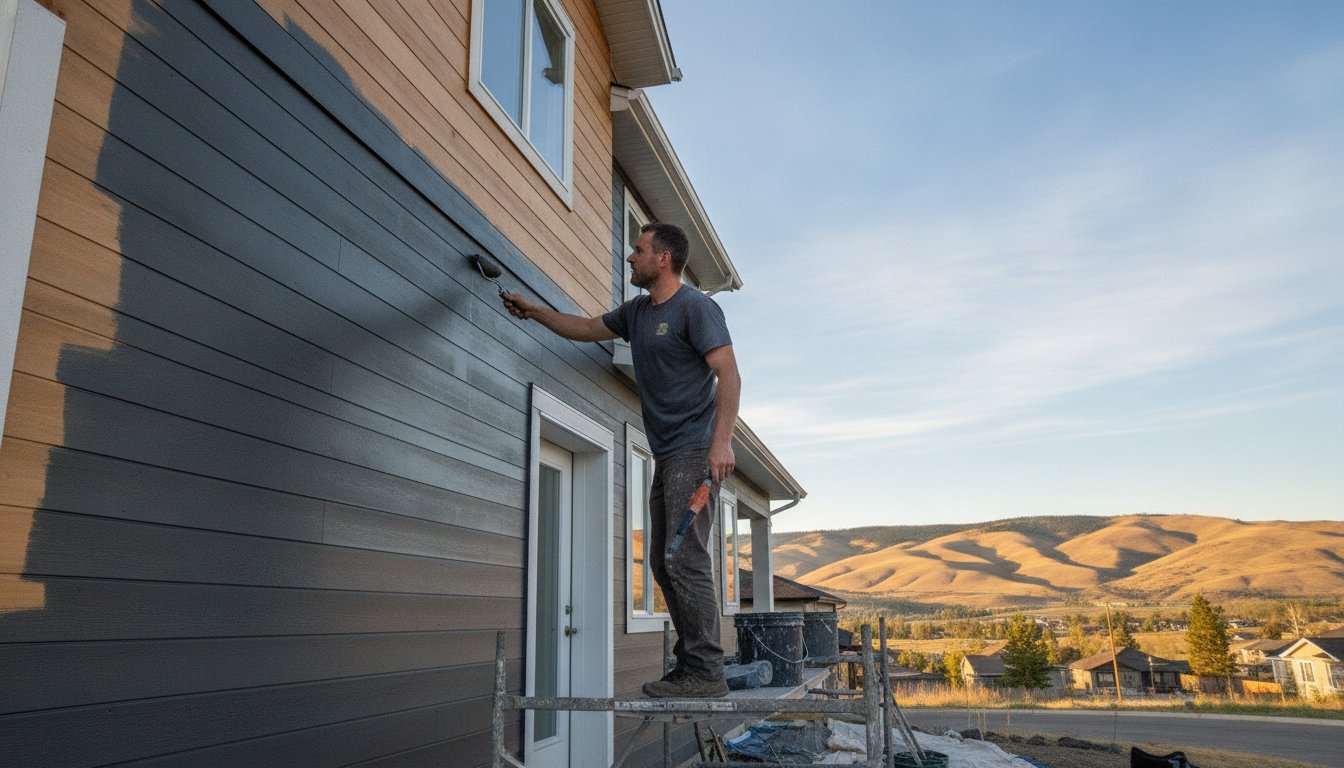
In the Thompson Valley, the greatest threat to your home's curb appeal isn't the winter snow or the spring rain; it's actually the relentless summer sun. While many homeowners wait for the hottest days to start their renovations, the intense UV rays and 35°C heat can ruin a finish before it even has a chance to cure. Finding the best time of year to paint house exterior in Kamloops requires a deep local understanding of our unique semi-arid climate and how it interacts with high-end materials.
We know you want more than just a quick change of color. You're looking to revitalize your environment and gain the peace of mind that comes with a job done with accuracy and care. It's frustrating to see a fresh coat of paint begin to peel because of poor timing, unpredictable spring showers, or wildfire smoke interference. This 2026 guide promises to help you navigate these local challenges with professional precision. We'll preview the ideal temperature windows for maximum adhesion, explain how to avoid the pitfalls of Interior BC weather, and show you how expert attentiveness ensures your home remains protected through the harshest seasons.
Key Takeaways
- Identify the best time of year to paint house exterior in Kamloops by targeting the moderate temperature windows of late spring and early fall.
- Learn how to apply the "4-Degree Rule" and humidity limits to prevent premature peeling and ensure a durable, high-tier finish.
- Understand the specialized drying requirements for different surfaces, such as porous stucco and regional wood siding, in a semi-arid climate.
- Navigate the local seasonal challenges of the Thompson Valley, from unpredictable "June Bug" rains to the impact of wildfire smoke on adhesion.
- Discover why securing your professional painting project by March is essential for achieving a flawless transformation during the 2026 season.
Why the Kamloops Semi-Arid Climate Dictates Your Exterior Painting Schedule
Kamloops isn't like the rest of British Columbia. While coastal cities spend their time fighting off constant drizzle, our local environment presents a different set of technical hurdles. The Kamloops semi-arid climate creates a rain shadow effect that makes our valley significantly drier and hotter than the Lower Mainland. This geographical quirk means that determining the best time of year to paint house exterior in Kamloops isn't just about avoiding a rainy day; it's about managing how quickly the paint dries and cures on your siding.
Low humidity in the Interior is a double-edged sword. On one hand, it reduces the risk of moisture being trapped behind the paint film, which prevents rot. On the other hand, extremely dry air can cause "flash drying." This happens when the liquid in the paint evaporates too fast, preventing the molecules from properly fusing together. This process, known as coalescence, is vital for a durable finish. If the paint dries before it can level out, you're left with brush marks, poor adhesion, and a surface that will likely peel within a few seasons. Additionally, the local sagebrush and semi-desert environment introduces fine dust that can settle on wet paint, ruining a flawless finish if the timing isn't precise.
The Thompson Valley Microclimate vs. Coastal BC
Coastal painters often start their season in early March, but that timeline doesn't work here. Our higher elevations and valley floor dynamics create localized weather patterns that demand attentiveness. For instance, homes in Sahali and Aberdeen often experience cooler temperatures and lingering frost long after the North Shore has warmed up. We also have to account for the North and South Thompson rivers. These bodies of water create high dew points in the early morning. Even if the air feels dry, a thin layer of moisture can sit on your siding until the sun is high enough to burn it off. Painting over this invisible dew is a recipe for disaster.
Understanding Thermal Expansion in Local Properties
The Thompson Valley is famous for its massive temperature swings. It's common to see 40-degree fluctuations between a hot afternoon and a crisp night. This causes your home's substrate, whether it's wood or stucco, to expand and contract rapidly. To survive these shifts, we prioritize the best time of year to paint house exterior in Kamloops when temperatures are stable. We use high-end, flexible paint films designed to move with your home. If the paint is applied during extreme heat, it becomes brittle. A professional approach ensures the coating remains elastic enough to handle the valley's thermal expansion without cracking or losing its protective seal.
The Month-by-Month Kamloops Exterior Painting Calendar
Timing your project correctly is the difference between a finish that lasts fifteen years and one that fails in three. While generic national guides suggest a broad summer window, the Kamloops climate normals show that our local weather patterns require a more surgical approach. Understanding these seasonal shifts allows us to revitalize your home when conditions are most favorable for long-term paint durability. We prioritize the intersection of accuracy and attentiveness to ensure every coat bonds perfectly to your siding.
Spring: The Race Against the June Rains
Late April is typically the earliest safe start for most Kamloops neighborhoods. Earlier in the spring, the risk of overnight frost remains high; this can freeze the water in latex paint before it cures, leading to immediate failure. By May, the valley warms up, but we must contend with high pollen counts from local flora. This yellow dust can settle on wet surfaces, compromising the smooth finish you expect. June brings the "June Bug" rains. These sudden, heavy downpours are more intense than coastal drizzle. We carefully monitor moisture levels in wood siding after the spring thaw to ensure the substrate is dry enough for maximum adhesion.
Summer: Surviving the Heat and Wildfire Smoke
July and August present the most significant logistical hurdles in the Thompson Valley. When temperatures exceed 35°C, the best time of year to paint house exterior in Kamloops is restricted to the early morning hours. We utilize a "Follow the Shade" technique, moving around the property to ensure we're never applying product to a sun-baked surface. This prevents flash drying and unsightly brush marks. We also have to navigate the "Smoke Season." Wildfire ash is chemically reactive and can act as a barrier between the paint and your home. If air quality dips significantly, we pause production to protect both the paint's integrity and the final aesthetic.
Fall: The Ideal Curing Window
September is arguably the best month for exterior work in the Thompson Valley. The air is crisp, the sun is less intense, and the humidity levels are perfect for slow, even curing. This "Golden Window" provides the best adhesion possible. However, we remain vigilant about the "First Frost" warnings, especially in higher-elevation areas like Aberdeen. Fall is the perfect time to address exterior painting needs before the harsh winter arrives, ensuring your home is sealed and protected against the upcoming snow and ice.
Critical Temperature and Humidity Thresholds for BC Interior Homes
Accuracy in exterior painting isn't just about picking a sunny day; it's about respecting the chemistry of the coating. To revitalize your home's exterior and ensure a finish that stands up to the Thompson Valley's climate, we monitor technical thresholds that generic advice often ignores. The best time of year to paint house exterior in Kamloops is ultimately defined by the intersection of surface temperature, ambient humidity, and the dew point. When these variables align, the paint can coalesce into a durable, protective shield.
Modern coatings have strict operating windows. The "4-Degree Rule" is our baseline; most high-end latex and alkyd products require at least 4°C to 10°C to begin the curing process successfully. However, the "Upper Limit" is where many local projects fail. While some guides suggest painting in any warm weather, we know that painting above 32°C is a recipe for disaster. At these temperatures, the liquid components of the paint evaporate before they can penetrate the substrate. This leaves the pigments sitting on the surface without a proper bond, leading to premature peeling and a chalky texture.
We also utilize moisture meters to verify that your siding is truly ready. Even in our dry climate, wood siding can retain significant moisture from a late-night storm or heavy morning dew. We look for a moisture content below 12% before we begin application. Furthermore, we distinguish between air temperature and surface temperature. A dark-colored wall in direct afternoon sun can easily be 15 degrees hotter than the surrounding air, pushing the material well past its safe application limit even on a seemingly moderate day.
The Problem with "Flash Drying" in Dry Climates
In our semi-arid environment, low humidity is a constant challenge. If the water leaves the paint film too quickly, the product cannot "level" out properly. This results in "flash drying," which manifests as visible lap marks, heavy brush textures, and a "burnt" appearance. We often use specialized additives to extend the open time of the paint, allowing our team the necessary window to achieve a smooth, professional finish despite the dry air.
Nighttime Temperatures: The Silent Killer of Paint Films
The first 24 hours of the curing process are critical for long-term durability. If the temperature drops below 5°C overnight, the chemical reaction that hardens the paint can stall or fail entirely. We use BC Interior Painting Pros expertise to monitor these overnight lows with precision. This is especially vital in higher-elevation neighborhoods like Aberdeen, where temperatures dip much faster than in the valley floor. Our attentiveness to these shifts ensures your home's new finish isn't compromised by a sudden midnight chill.

How Your Home’s Material Changes the Timing
The physical makeup of your home determines how it reacts to the Thompson Valley’s unique environment. While we’ve discussed climate thresholds, the best time of year to paint house exterior in Kamloops also shifts based on whether you are coating porous stucco or dense composite siding. Each material has a specific "thirsty" period where it absorbs product most effectively, ensuring the high-tier finish our clients expect. Our team focuses on the intersection of material science and local timing to revitalize your property with precision.
Stucco remains the most common exterior in our city, and it is also the most technically demanding. Its porous surface acts like a sponge, holding onto microscopic moisture long after the air feels dry. Wood siding, such as cedar or pine, faces the opposite challenge. The intense dry air of the Interior can cause wood to shrink and warp if it isn't sealed during a moderate weather window. Alternatively, Hardie Plank and composite materials are more forgiving regarding moisture, though they still require the technical accuracy of professional application to prevent lap marks during the summer heat. Identifying the best time of year to paint house exterior in Kamloops means matching our schedule to these substrate-specific needs.
Stucco Repair and Painting in the Interior
A common mistake in the local market is rushing the transition from repair to finish. Stucco repair must be completed weeks before we apply the final coat. This delay is essential for proper pH balancing; fresh stucco is highly alkaline and can "burn" through paint if not allowed to cure and neutralize. We typically recommend performing these repairs in the stable months of May or September to avoid the cracking caused by winter's freeze-thaw cycles. You can learn more about Stucco Repair and how it integrates into a total home transformation.
Deck and Fence Staining Windows
Staining is a delicate process that requires even stricter weather windows than standard painting. Unlike paint, which sits on top of the surface, stain must penetrate deep into the wood grain to be effective. If the wood is too hot from the Thompson Valley sun, the stain will dry on the surface, leading to a sticky, peeling mess. We always insist on professional pressure washing followed by a minimum 48-hour dry time before we begin. This ensures the wood "pores" are open and ready to receive the product. To revitalize your outdoor living space, it's best to book your deck and fence staining during the early fall when the sun’s intensity has finally begun to fade.
Planning and Booking Your 2026 Kamloops Painting Project
Understanding the best time of year to paint house exterior in Kamloops is a vital first step, but executing that vision requires careful logistical planning. In the Thompson Valley, the window for a high-tier finish is narrow. Demand for skilled labor peaks early, meaning the "Booking Rush" typically begins while there is still snow on the ground. Securing your project on the calendar by March is the most reliable way to ensure your home is treated during the optimal late-spring or early-fall windows we have discussed.
While a DIY approach might seem like a productive weekend task, managing a ladder in 35°C heat while trying to maintain a "wet edge" is a significant technical challenge. Professional teams provide more than just labor; they bring a specialized focus that allows for rapid application before the sun can "burn" the paint film. We utilize professional-grade equipment and high-end materials that are specifically formulated to handle the low humidity and intense UV of the BC Interior. This ensures your investment doesn't just look good for a season but remains a point of pride for years to come.
Why Local Expertise Matters for Your Estimate
A professional quote should be as accurate as the painting itself. We don't just look at square footage. We calculate prep time based on your property's specific sun exposure. For example, south-facing walls in neighborhoods like Juniper Ridge or Westsyde endure far more UV damage and require more intensive scraping and priming than north-facing sides. Our commitment to accuracy means we account for these variables before the first drop of paint is ever poured. You can read our guide on Painters Kamloops to see how we approach every project with artisan skill and regional knowledge.
The BC Interior Painting Pros Difference
We believe that a professional service should do more than just apply a color; it should revitalize your environment and provide lasting peace of mind. By choosing the best time of year to paint house exterior in Kamloops and pairing it with our team's attentiveness, you ensure a flawless transformation. We take pride in our transparent process and our history of reliability across the Thompson Valley. If you are ready to protect your home with a durable, high-tier finish, request your free exterior painting estimate today!
Is your home ready for the 2026 season? Use this final checklist:
- Inspect your stucco or wood siding for visible cracks or moisture damage.
- Trim back sagebrush and landscaping to provide at least two feet of clearance from the walls.
- Identify any areas of failed adhesion or "chalking" from previous paint jobs.
- Confirm your preferred color palette and check for any local neighborhood guidelines.
Secure Your Flawless Home Transformation for 2026
Protecting your property requires more than a fresh coat of paint; it demands a deep respect for the Thompson Valley microclimate. By identifying the best time of year to paint house exterior in Kamloops, you avoid the risks of flash drying and premature peeling. We've explored how moderate temperatures and substrate-specific drying times create the perfect foundation for a finish that lasts. Quality matters. Our locally owned and operated artisan team brings 20+ years of local experience to every project, specializing in the unique maintenance needs of Kamloops stucco and wood exteriors.
You deserve the peace of mind that comes with a professional transformation. We combine high-end materials with technical accuracy to ensure your home survives our harsh winters and intense summers. Let's work together to bring your vision to life with the attentiveness your property deserves. Get a Free Exterior Painting Quote from Kamloops Experts and secure your spot on our 2026 calendar. We look forward to helping you protect and revitalize your environment.
Frequently Asked Questions
What is the absolute best month to paint a house in Kamloops?
September is the absolute best month for exterior work because the intense Thompson Valley heat has subsided while the overnight frost hasn't yet arrived. This period offers the most stable curing conditions. We find that the air is crisp and the UV intensity is lower, which prevents the paint from drying too quickly. It's the best time of year to paint house exterior in Kamloops if you want a finish that survives the upcoming winter.
Can you paint a house in Kamloops during the winter?
You cannot paint a house exterior during a typical Kamloops winter. Modern latex and alkyd paints require temperatures to stay above 4°C to 10°C even during the overnight curing phase. Our sub-zero temperatures will freeze the water in the paint before it can bond to your siding. This results in immediate cracking and total coating failure. We focus on interior projects during these months to maintain our standards of quality and reliability.
How does wildfire smoke affect my exterior paint job?
Wildfire smoke significantly impacts paint adhesion because ash and fine particulates settle on the wet surface. These particles create a physical barrier between the paint and your home's substrate. Chemically, the smoke can also affect the curing process of high-end materials. We monitor local air quality closely and will pause production if the smoke becomes thick enough to compromise the technical accuracy of the finish. This attentiveness ensures your home's transformation remains flawless.
Is it too hot to paint my house in July or August in Kamloops?
July and August are often too hot for mid-day painting when temperatures exceed 32°C. Intense heat causes the paint to flash dry, which leads to unsightly lap marks and poor penetration into the substrate. If we work during these months, we start at dawn and follow the shade around the property. This professional approach ensures the surface temperature of your siding stays within a safe range for high-tier application and long-term results.
What is the minimum temperature for exterior painting in BC?
The minimum temperature for exterior painting in the BC Interior is generally 4°C for specialized low-temp products or 10°C for standard coatings. However, the surface must remain at this temperature for at least 24 hours to ensure proper coalescence. We use precision tools to check both air and substrate temperatures, especially in higher-elevation neighborhoods like Aberdeen where the mercury drops quickly once the sun sets behind the hills. Accurate monitoring prevents premature peeling.
How long does it take for exterior paint to dry in the dry Kamloops air?
In our dry, semi-arid air, paint can feel dry to the touch in as little as 30 to 60 minutes. However, dry is not the same as cured. While you can apply a second coat relatively quickly, the paint film takes several weeks to reach its maximum hardness and durability. We manage this fast-drying environment with specialized additives that prevent the product from becoming brittle before it has properly leveled out and bonded.
Do I need to pressure wash my house before painting in a dry climate?
You must pressure wash your home before painting, even in a dry climate. Kamloops is known for fine sagebrush dust, pollen, and spider webs that cling to stucco and wood siding. If these contaminants aren't removed, the paint will bond to the dirt rather than your house. Our team performs a thorough wash and allows 48 hours of drying time to ensure the best time of year to paint house exterior in Kamloops isn't wasted.
What happens if it rains unexpectedly during my painting project?
If it rains unexpectedly, we stop application immediately and protect any wet areas with plastic sheeting. Rain can wash away uncured paint or cause surfactant leaching, which leaves oily streaks on the finish. We don't resume work until we verify that the moisture content of your siding has returned to a safe level, typically below 12%, using a professional-grade moisture meter. This commitment to accuracy protects your home from moisture-related failures.


