
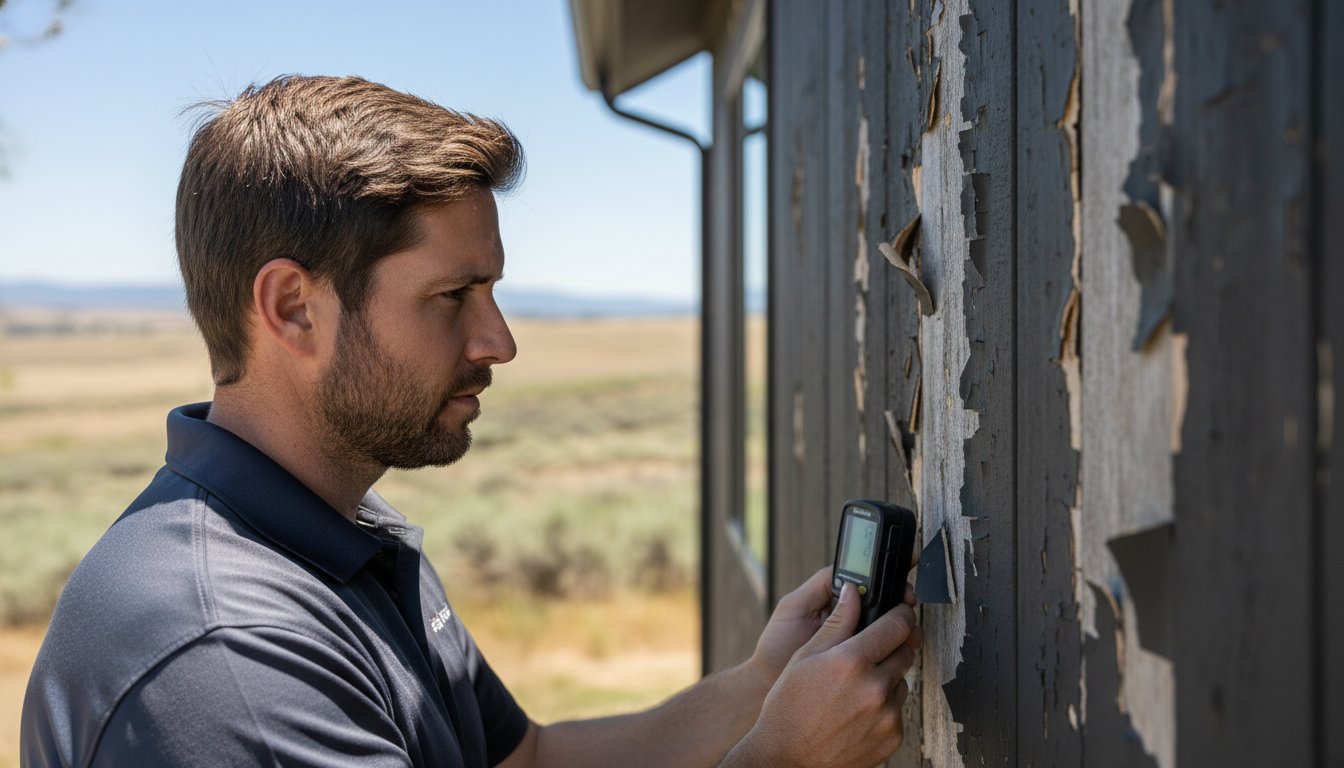
That premium, low-VOC acrylic paint you just invested in isn't failing because of the brand; it's failing because the application ignored the invisible physics of your home's exterior. It's incredibly frustrating to watch a significant investment flake away while you wonder if the culprit was a humid afternoon, poor prep work, or a structural moisture leak. You deserve more than a quick fix that merely masks deeper issues. By utilizing a professional exterior paint failure analysis, you can move beyond guesswork and identify exactly why your finish is failing to thrive in our local climate.
We understand that a home's exterior is its first line of defense, and we're committed to the accuracy and attentiveness required for a lasting transformation. This guide teaches you how to diagnose common issues using professional ASTM standards, such as D660 for checking or D4214 for chalking, so you can stop the cycle of wasted money. You'll gain a clear plan for permanent remediation and the confidence to choose a contractor who treats your property like a masterpiece. We'll examine the intersection of modern chemistry and environmental stressors to ensure your next finish provides true peace of mind and revitalizes your environment for years to come.
Key Takeaways
- Distinguish between minor aesthetic wear and serious structural coating failures to prioritize your property's long-term protection.
- Utilize professional exterior paint failure analysis techniques, such as substrate moisture testing, to identify the precise environmental triggers behind peeling and flaking.
- Implement high-tier remediation strategies, including thorough pressure washing and mechanical sanding, to create a flawless foundation for new coatings.
- Evaluate the chemistry of 100% acrylic resins versus alkyd hybrids to select a product that withstands our specific regional weather stressors.
- Understand how your choice of warm, nature-inspired color palettes affects solar heat gain and the ultimate durability of your exterior finish.
What is Exterior Paint Failure Analysis?
Exterior paint failure analysis is the systematic, forensic investigation into why a coating system has degraded prematurely. It's a process that goes far beyond a simple visual inspection. Our team treats your home as a complete ecosystem, examining how the paint film interacts with the substrate and the surrounding environment. While some wear is expected over a decade, premature peeling or cracking is a symptom of a deeper conflict. By applying professional standards, such as ASTM D660 for checking or D661 for cracking, we move past guesswork to find the definitive cause of the breakdown. This approach represents the intersection of accuracy and attentiveness, ensuring we don't just cover up a problem but solve it at the source.
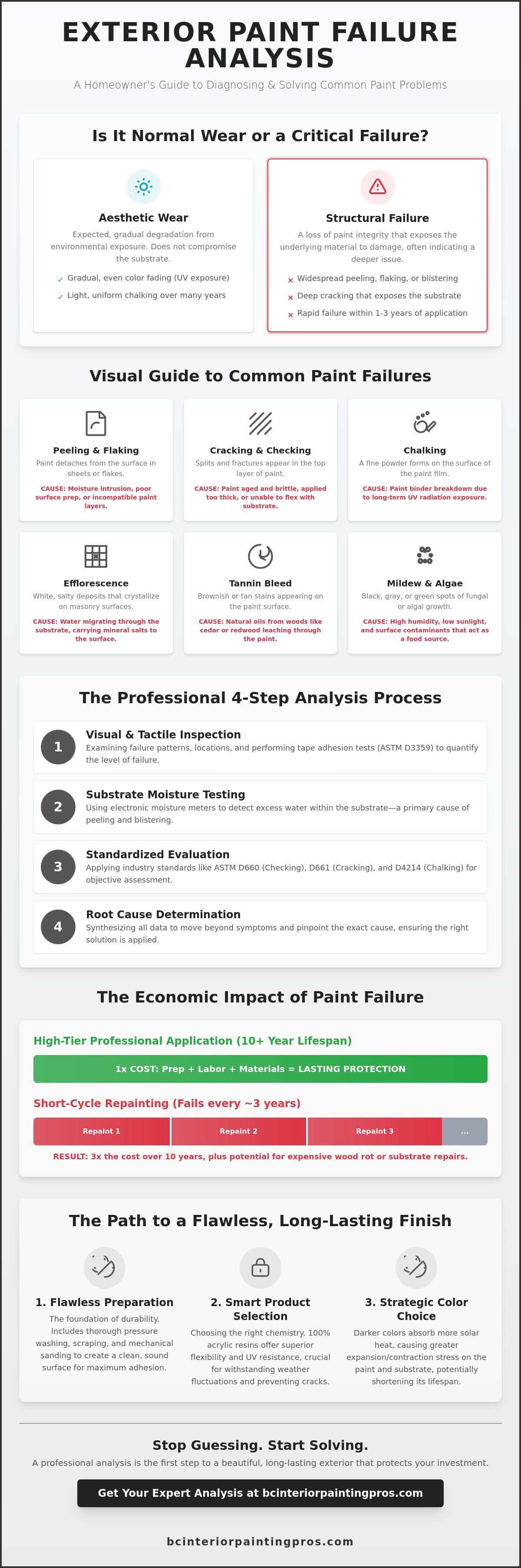
There's a vital distinction between aesthetic wear and structural coating failure. Aesthetic wear includes natural fading or light chalking, which are the expected results of UV exposure over many years. Structural failure, however, involves a total loss of adhesion where the paint delaminates from the surface. This often indicates an issue with the building envelope, such as moisture migrating from the interior of the home through the siding. While modern residential methods focus on current performance, they draw heavily from the scientific analysis of paint used to preserve heritage structures. Understanding these layers is the only way to revitalize your property with a finish that truly lasts.
The Economic Impact of Premature Failure
Short-cycle repainting is a quiet financial drain on homeowners. If a paint job fails in only three years, you're forced to pay for labor and materials three times more often than a high-tier, professional application would require. Beyond the cost of the paint itself, failure often invites moisture into the substrate. This leads to secondary structural issues like wood rot or stucco degradation, which are significantly more expensive to remediate; in these scenarios, professional water mitigation from DK Production is vital to stabilize the home. A professional exterior paint failure analysis provides the data needed to break this cycle, protecting both your home's integrity and your long-term budget.
Key Indicators You Need a Forensic Analysis
You should seek a forensic assessment if you notice specific patterns that defy standard wear. Rapid failure occurring within one to three years of application is the most common red flag. You should also watch for localized failure patterns. For instance, if the paint is only failing on the south-facing side of the house, thermal shock or extreme UV degradation may be the culprit. Another high-priority indicator is the appearance of efflorescence, a white, powdery salt deposit, or unexplained moisture bubbles beneath the paint film. These signs suggest that the issue isn't the paint itself, but rather a substrate or moisture management problem—which can often be traced back to the roof, as noted by the experts at Colorado Pro Roofing—that must be addressed before any new coating is applied. To see how professional diagnostic services identify these underlying structural issues, visit A Premier Home Inspection for an example of a comprehensive property assessment.
Common Manifestations of Exterior Paint Failure
Paint doesn't simply "go bad" without a reason. It responds to the laws of physics and chemistry. To perform an accurate exterior paint failure analysis, we must first categorize the degradation as either mechanical or chemical. Mechanical failure occurs when the paint film loses its flexibility and can no longer expand or contract with the substrate, leading to visible cracks. Chemical failure involves the breakdown of the paint's binder or pigments, often caused by UV radiation or harsh environmental cleaners. A report from the USDA Forest Products Laboratory highlights several common causes of exterior paint failure, noting that the interaction between moisture and sunlight is the most frequent catalyst for these breakdowns.
Beyond simple cracking, we often see substrate-related issues that require specialized attention. Efflorescence, for example, appears as a white, crystalline salt deposit on masonry or stucco surfaces. This happens when moisture carries minerals from the substrate to the surface, where they crystallize under the paint film. Tannin bleed is another common hurdle, specifically on cedar or redwood, where natural oils leach through the coating and create dark, brownish stains. Biological growth, such as mildew, algae, or fungi, typically thrives in shaded areas with high humidity. If you're struggling to identify these complex patterns, our local painting experts can provide a detailed assessment to revitalize your home's exterior.
Adhesion Failure: Peeling and Flaking
Peeling is the ultimate sign of a failed bond. We distinguish between inter-coat delamination, where paint peels from a previous layer, and substrate delamination, where the coating separates entirely from the bare wood or stucco. To assess the risk of future failure, we often perform a "cross-hatch" test. This involves cutting a small grid into the existing film and applying specialized tape to see how much of the coating remains intact. Peeling typically begins at joints, corners, and trim edges because these areas are the first to encounter moisture ingress and mechanical stress.
Surface Distortions: Blistering and Bubbling
Blisters are air or fluid-filled pockets that disrupt the uniformity of your finish. Heat blistering occurs when a fresh coat of paint is applied in direct, hot sunlight. The surface skins over too quickly, trapping solvents that expand and push the film upward. This is a frequent issue with modern, dark color palettes that absorb significant solar heat. Moisture blistering is a more severe structural warning. It indicates that water vapor is migrating through the building envelope and pushing the paint away from the substrate. Identifying whether a bubble contains liquid or air is a critical step in our forensic diagnosis.
Forensic Diagnosis: Determining the Root Cause
To stop the cycle of peeling and flaking, we must adopt an investigative mindset. A professional exterior paint failure analysis doesn't start with a scraper; it starts with rigorous data collection. We follow a four-step diagnostic protocol to ensure your home's transformation is permanent. First, an environmental site assessment identifies external factors like poor drainage or dense vegetation that traps humidity against your walls. Second, we utilize professional-grade moisture meters to check the substrate's saturation levels. High moisture is the silent killer of adhesion. Third, we conduct a historical analysis to determine what coatings were applied previously and how they were layered. Finally, a microscopic examination of failed paint flakes reveals whether the failure occurred between layers or at the substrate level.
This thoroughness represents our commitment to the intersection of accuracy and attentiveness. We don't just guess why a finish is failing. We use these forensic steps to revitalize your environment with a plan based on hard evidence. By identifying the root cause, which may include structural moisture issues identified by Colorado Pro Roofing, we ensure that the high-end materials we apply later will bond perfectly to a stable, prepared surface. This prevents the "short-cycle" repainting that costs homeowners thousands in repetitive labor and material fees.
The Role of Kamloops Climate in Paint Stress
Our local climate presents unique challenges that many standard paint jobs simply can't handle. In Kamloops, we experience extreme thermal shock. Temperatures often climb to 40°C in the summer and plummet to -20°C in the winter. This 60-degree variance causes siding materials to expand and contract violently. If a coating lacks the high-tier elasticity required for these swings, it will inevitably fatigue and snap. High UV radiation also accelerates the breakdown of paint binders, while the cycle of low humidity followed by sudden rain puts immense pressure on porous surfaces.
Substrate Issues: Wood vs. Stucco
Different materials fail for different reasons. Stucco requires "breathable" coatings that allow water vapor to escape from the building envelope. If a non-breathable film is used, moisture gets trapped, leading to spalling and surface degradation. On wood surfaces, specifically cedar, tannin migration can destroy adhesion from the inside out if the surface isn't properly primed. We also watch for "mill glaze" on new wood installations. This shiny, compressed layer of fibers prevents paint from penetrating the grain, leading to early failure even when using superior supplies. Identifying these substrate-specific hurdles is essential for a lasting finish.
For homeowners with high-end timber elements, looking to specialists like Crandall Painting & Stucco provides a benchmark for luxury wood restoration and long-term preservation in demanding environments.
Professional Remediation and Surface Preparation
A successful remediation begins where the exterior paint failure analysis ends. We use the diagnostic data to determine which physical and chemical removal methods will best stabilize your home's exterior. Pressure washing serves as our primary decontamination tool, removing atmospheric pollutants, salt deposits, and loose paint flakes that prevent proper bonding. We don't just rinse the surface; we use specific pressure settings to ensure we don't force moisture too deep into the substrate while still achieving a clean, sound surface. For advice on maintaining other exterior elements such as window frames during this process, learn more about My Property Pros and their specialized cleaning techniques. For areas with significant adhesion loss, we transition to mechanical techniques like scraping, sanding, and occasionally grinding to feather the edges of remaining paint and create a smooth profile for the new coating.
Chemical remediation is equally vital when dealing with biological growth or mineral deposits. If our analysis identified mildew or algae, we apply specialized biocides to kill spores at the root. Similarly, efflorescence requires neutralization with mild acidic solutions to prevent salts from pushing through your new finish. This level of thoroughness ensures that we aren't just masking problems but revitalizing the environment with a foundation built for longevity. If you're ready to stop the cycle of peeling, our expert painting team is ready to provide a permanent solution.
Advanced Priming Strategies
Priming is the bridge between a problematic substrate and a high-tier finish. We utilize specialty masonry primers for "chalky" stucco to bind loose particles into a paintable surface. While traditional oil-based primers were once the standard, we often favor modern moisture-tolerant acrylic primers that offer superior breathability and flexibility. For difficult, high-gloss surfaces, we apply a dedicated "bond coat" that uses advanced resin technology to grip the existing finish, ensuring the new layers won't delaminate under thermal stress.
Integrating Stucco Repair
You cannot have a lasting paint job on failing stucco. Our forensic approach identifies hairline cracks that act as straws, pulling moisture into the wall assembly. We prioritize fixing these structural vulnerabilities before the first drop of paint is applied. By sealing these entry points and matching the surrounding texture, we create a seamless repair that prevents future moisture-driven peeling. Learn more about our stucco repair services and how they integrate into our comprehensive exterior protection plans. Furthermore, industry experts like Metro Reconstruction Services, Inc. demonstrate how dedicated reconstruction expertise is vital for maintaining a home's structural integrity. This proactive stabilization is the only way to ensure your investment survives the local climate's intense seasonal shifts.
Long-Term Protection Strategies for Your Exterior
Achieving a lasting finish requires a shift from reactive repairs to proactive protection. Once an exterior paint failure analysis has identified and resolved past issues, the focus moves to selecting materials that can survive the long term. We prioritize 100% acrylic resin technology because it remains the professional standard for durability, currently accounting for 59.4% of the market. Unlike older formulations, high-end acrylics maintain the elasticity needed to survive the extreme thermal shock of the BC Interior. While alkyd hybrids have their place for specific adhesion needs, the breathability of acrylics is essential for preventing the moisture-driven delamination we analyzed in previous sections.
Your choice of color also dictates the lifespan of your coating. While dark charcoals and deep earthy tones are popular for 2026, they absorb significantly more solar heat. This increased heat gain can accelerate the breakdown of the paint's binder and lead to premature fading or blistering. We guide our clients toward nature-inspired palettes that balance aesthetic appeal with thermal performance. Establishing a consistent maintenance schedule is the final piece of the puzzle. We recommend an annual "Inspect and Touch-up" walk-through to catch minor hairline cracks or mechanical damage before they evolve into systemic failures. A professional application ensures that manufacturer warranties remain valid, as brands only honor guarantees when their products are applied to surfaces that meet strict ASTM standards.
Choosing High-Performance Materials
We recommend Benjamin Moore products for the Kamloops climate because their proprietary resins offer superior UV resistance and color retention. For homes with heavy texture or stucco, we utilize high-build coatings that provide a thicker protective film over peaks and valleys. These superior supplies, when paired with professional execution, act as a verbal shorthand for the value we bring to every project. Explore our 2026 colour trends for exterior durability to see how these high-performance materials look in modern, earthy palettes that reflect our regional identity.
The BC Interior Painting Pros Guarantee
Our team takes pride in being skilled artisans who value long-term results over quick fixes. Our commitment to accuracy and attentiveness means we don't just paint; we revitalize your environment with a focus on structural integrity and peace of mind. By following our rigorous forensic approach, we ensure your home remains a source of pride rather than a maintenance burden. We prioritize clarity through service guarantees and cost transparency, building trust incrementally from the first consultation to the final brushstroke. Contact us for a professional failure analysis: Get a Free Estimate today and discover how our vision can be brought to life.
Securing Your Home's Future with Forensic Precision
Your property deserves a finish that doesn't just look beautiful today but stands strong against the intense seasonal shifts of the BC Interior. We've explored how identifying the root cause of degradation is the only way to break the cycle of premature peeling. By combining specialized stucco repair with high-tier pressure washing, you create a foundation that respects the unique needs of your home's building envelope. Through a rigorous exterior paint failure analysis, we eliminate the guesswork and provide a definitive roadmap for a lasting transformation.
Our team brings over 20 years of local expertise to every project, focusing on the artisanal quality that ensures your investment holds its value. We revitalize your environment by pairing superior supplies with the accuracy and attentiveness your home requires. Don't settle for another temporary fix that masks underlying issues. Book Your Professional Exterior Analysis in Kamloops Today and take the first step toward true peace of mind. We look forward to helping you achieve a finish that endures for years to come.
Frequently Asked Questions
Why is my exterior paint peeling only on the south side of my house?
South-facing walls endure the highest UV exposure and most intense thermal shock. The constant sun breaks down the paint's binder faster than on shaded sides, while the rapid heating and cooling cycles cause the substrate to expand and contract violently. This mechanical stress eventually snaps the paint film if it lacks the high-tier elasticity of 100% acrylic resins. Our team uses specific diagnostic steps to identify if the failure is purely solar or linked to moisture migration.
Can I paint over paint that is already flaking if I use a good primer?
You should never apply new coatings over flaking paint because the bond is only as strong as the weakest layer. Even the best primer won't fix a base layer that has already lost its adhesion to the substrate. If you skip mechanical removal, the new paint will simply pull the old, loose flakes off the wall. This leads to a total system failure within months, wasting both your time and your investment in premium materials.
How long should a professional exterior paint job last in Kamloops?
A high-quality professional paint job in our climate typically lasts between seven and ten years. This longevity depends on thorough surface preparation and the use of premium materials designed for extreme temperature swings. Factors like the quality of your siding and local environmental stressors, such as proximity to high-wind areas or dusty roads, can influence this timeline. Regular maintenance and annual inspections can help extend this period by catching minor issues before they escalate.
What is the difference between paint cracking and alligatoring?
Cracking is often a single line of failure caused by the substrate moving more than the paint can stretch. Alligatoring is a more advanced pattern that looks like reptile scales, usually occurring when a hard topcoat is applied over a soft, uncured undercoat. A professional exterior paint failure analysis can distinguish between these two patterns to determine if the issue is application-related or a result of product incompatibility. Identifying this early ensures the remediation plan is accurate.
Is pressure washing enough to prepare a failing paint surface?
Pressure washing is a vital first step for decontamination, but it's rarely enough on its own for failing surfaces. While it removes dirt and loose flakes, it doesn't address the feathering needed for remaining paint edges or the scuffing required for mechanical adhesion. You typically need to follow washing with manual scraping and sanding to create a stable, uniform profile. This thoroughness is what separates a short-term fix from a professional, long-lasting transformation.
Does a dark paint colour make my exterior more likely to fail?
Darker colors absorb more solar radiation, which significantly increases the surface temperature of your siding. This heat can cause solvent trap bubbling in fresh paint or accelerate the breakdown of binders in older films. If you choose a dark palette for your home, it's critical to use high-performance coatings with advanced heat-reflective technology. We help our clients select colors that offer both modern aesthetic appeal and the thermal performance required for our region.
How much does a professional exterior paint failure analysis cost?
We provide a comprehensive assessment as part of our initial consultation process to ensure every project begins with a clear remediation plan. While some specialized forensic consultants charge separate fees, we integrate this analysis into our service to guarantee the long-term durability of our work. This transparent approach ensures you aren't paying for a quick fix that will fail again. We believe that accuracy and attentiveness during the quote stage are essential for building trust.
What happens if I ignore efflorescence on my stucco before painting?
Ignoring efflorescence ensures that your new paint will peel prematurely. These white salt deposits indicate that moisture is migrating through the stucco; as the water evaporates, the salts expand and push the paint film away from the surface. You must neutralize these salts and address the underlying moisture source to revitalize your environment and protect your home's structural integrity. Proper exterior paint failure analysis identifies these mineral issues before they can ruin a fresh coat of paint.


