
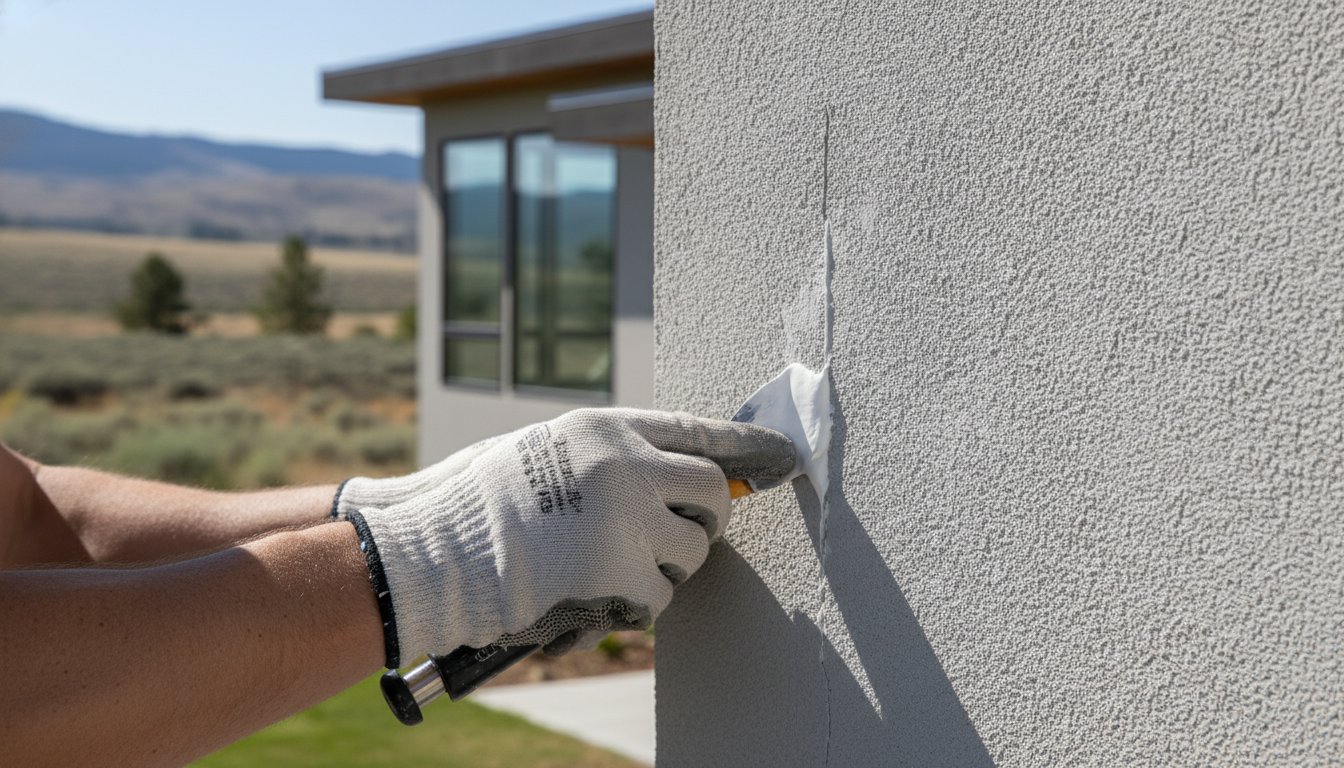
What if those thin, spider-web lines on your exterior walls are actually "breathing" joints rather than just minor blemishes? Most homeowners see a hairline crack in stucco repair as a simple cosmetic fix, but these small openings often act as a gateway for moisture in the extreme Kamloops climate. It's natural to feel frustrated by visible "scars" from past DIY attempts or to worry that a tiny gap might lead to expensive water damage. You aren't alone in this concern; data suggests that over 30% of residential stucco repairs are eventually required to address water intrusion issues that started small.
You deserve the peace of mind that comes from a waterproof, seamless exterior that looks as good as the day it was first applied. We believe in revitalizing your environment through a commitment to quality and technical precision. This guide explains how to identify different types of damage, why flexible restoration beats rigid fillers, and how to follow BC Building Code standards for a lasting bond. You'll learn how to protect your home's structural health through accuracy and attentiveness, moving beyond quick fixes to achieve a professional result that stands up to the elements.
Key Takeaways
- Identify the specific environmental factors in Kamloops that trigger seasonal expansion and turn minor fissures into significant moisture risks.
- Avoid the "caulk trap" by choosing high-performance elastomeric materials designed for a durable hairline crack in stucco repair rather than temporary hardware store fixes.
- Understand the technical restoration sequence, including the critical V-grooving step that ensures a seamless and structural bond with your home's exterior.
- Discover how specialized exterior coatings serve as a protective "liquid skin" to unify your home’s appearance and prevent recurring damage.
- Learn to distinguish between cosmetic surface blemishes and deeper structural concerns to ensure your home remains waterproof and resilient for years to come.
Understanding Hairline Cracks in Stucco: Causes and Risks
Hairline cracks are narrow fissures, typically measuring less than 1/16th of an inch. While they might seem like minor cosmetic blemishes, they are often the first sign that your home's exterior envelope is under stress. To understand why these cracks develop, it helps to explore What is Stucco? and how its cement-based composition reacts to environmental pressure. Unlike wood or vinyl siding, stucco is a rigid material that doesn't naturally bend. When the ground shifts or the temperature changes, the stucco must either move or break. This lack of flexibility is why even high-quality installations eventually develop minor openings.
We see two primary types of these fissures in our local work. Shrinkage cracks often appear in newer builds as the stucco cures and loses moisture during the drying process. Settlement cracks, however, are more common in established homes where the foundation has shifted slightly over time. Identifying the cause is the first step in a successful hairline crack in stucco repair. Without addressing the root cause, a simple patch will likely fail when the house moves again. The primary risk isn't the crack itself; it's the moisture intrusion that follows. Even a tiny opening can allow water to seep behind the lath, leading to hidden rot and mold that compromises your home's structural integrity.
The Role of Kamloops Weather in Stucco Damage
Our local climate presents a unique challenge for exterior finishes. Kamloops experiences extreme temperature swings, with summers reaching +35°C and winters dropping to -20°C. This 55-degree variance forces your home to expand and contract significantly every year. During the winter, we often see the destructive freeze-thaw cycle. Water enters a small crack during a sunny afternoon, freezes when the temperature drops at night, and expands with enough force to widen the gap. Local soil conditions also contribute to minor foundation shifting that puts constant pressure on your exterior walls, making durability a top priority.
When a Hairline Crack Becomes a Structural Warning
Determining if a crack is "active" or "dormant" is vital for long-term protection. You can monitor this by making a tiny pencil mark at the ends of the crack. If the fissure grows past those marks within a month, it's active and requires professional attention. Watch for these specific warning signs:
- Discoloration: Brown or gray staining around the crack indicates water is already trapped behind the surface.
- Bulging: If the stucco feels soft or looks like it's pulling away from the wall, the lath may be rusting or the wood sheathing could be rotting.
- Interior Dampness: If you notice musty smells or damp spots on your interior drywall, the exterior barrier has likely failed.
The rule of thumb is simple: if a crack is wider than a credit card or shows signs of bulging, it's time to stop the DIY approach and call a professional. At this stage, a hairline crack in stucco repair requires more than just a surface filler. It needs a technical restoration to restore the building envelope's integrity and ensure your home remains a safe, dry environment.
Evaluating Repair Materials: Caulk vs. Specialized Patching
Many homeowners fall into the "caulk trap" when they first notice a small fissure on their exterior walls. It's tempting to grab a standard tube of painter's caulk from a local hardware store, but this often leads to peeling and failure within just two seasons. Stucco is a porous, mineral-based material that requires a specialized bond. Standard caulking lacks the breathability and chemical compatibility needed for a permanent hairline crack in stucco repair. Instead, we advocate for the use of high-performance elastomeric sealants that mimic the texture of the wall while providing a waterproof barrier that won't pull away when the temperature drops.
Choosing between sanded and unsanded compounds depends entirely on your existing finish. Sanded fillers are essential for traditional "dash" or "lace" textures because they blend the patch into the surrounding area by mimicking its grit. For smoother, modern acrylic finishes, an unsanded compound prevents the repair from looking like a raised, obvious scar. In our high-altitude BC environment, UV resistance is non-negotiable. Intense sunlight can bake rigid fillers until they become brittle and crumble. Following the principles of professional stucco restoration ensures that your materials can withstand both the sun and the cold without losing their essential adhesion.
Why Elasticity is Your Stucco's Best Friend
Stucco isn't static. It moves with the seasons. Elastomeric sealants possess "memory," meaning they can stretch and return to their original shape as your home expands and contracts. This elasticity bridges the gap during winter contraction when the crack naturally widens. Unlike rigid Portland cement patches that crack under the slightest pressure, these acrylic-based fillers create a flexible bridge. This chemical bond is far superior to silicone, which often fails to take paint and can leave oily residues on your masonry that complicate future maintenance.
Pros and Cons of DIY Repair Kits
Retail "stucco in a tube" products offer a quick fix for small projects, but they come with significant limitations. The most difficult challenge is color matching. Pre-mixed retail products rarely match the weathered hue of your home, often resulting in visible "band-aid" marks that frustrate homeowners. While a DIY tube costs between $5 and $15, professional-grade materials offer a 10-year lifespan compared to the 2-year window typical of consumer-grade patches. If you want a result that disappears into the wall, our team views exterior painting as a technical restoration rather than just a manual task, ensuring your home receives the expert skill it deserves.
The Professional Approach to Hairline Crack Restoration
Restoring a home's exterior requires more than a quick patch; it demands a technical sequence that respects the original craftsmanship of the wall. We don't just cover the damage. Instead, we follow a disciplined methodology to ensure every hairline crack in stucco repair provides long-term protection against the elements. The process begins with deep cleaning. We use a stiff wire brush to remove debris and loose particles, ensuring the bonding agent has a clean, stable surface to grip. In many cases, we utilize the professional pressure washing Kamloops homeowners rely on to strip away oxidation and environmental pollutants before the restoration begins.
A common mistake in DIY projects is applying filler directly over the surface. Our team employs professional stucco restoration techniques like V-grooving to prevent premature failure. This involves widening the crack slightly with a specialized tool to create a small channel. This channel allows the flexible sealant to sit deeper within the wall, creating a structural "plug" rather than a thin surface film. This depth is critical for withstanding the expansion and contraction cycles common in the BC Interior. Once the channel is prepared, we apply a high-tier bonding agent or flexible filler with precision, ensuring it reaches the back of the groove without leaving air pockets.
Surface Preparation and Pressure Washing
Preparation is the foundation of a lasting repair. We focus on removing loose "spalling" stucco, which is the flaky, damaged layer that often surrounds a crack. If this substrate isn't solid, the patch will eventually fall off. During the cleaning phase, we are careful not to saturate the substrate. Excessive water behind the stucco can lead to trapped moisture, which defeats the purpose of the repair. We aim for a clean, slightly damp surface that encourages the filler to cure slowly and bond effectively.
Mastering Texture Matching: Sand, Dash, and Lace
The "Art of the Match" is what separates a professional restoration from a visible scar. While some guides suggest simply wiping away excess filler with a finger, we use specialized tools to replicate your home's unique finish. To mimic a sand finish, we use a damp sponge or soft brush to raise the grit while the patch is wet. Replicating a "dash" or "pebble" texture requires a flicking motion with a brush to distribute small particles of material across the repair. By feathering the edges of the patch into the surrounding wall, we ensure the repair disappears from view, revitalizing your environment and restoring your home's aesthetic value.

Preventing Recurrence: The Power of Exterior Coatings
A localized patch serves as a necessary fix, but your home's envelope requires a unified defense to remain resilient. A hairline crack in stucco repair only addresses the immediate symptom of environmental stress. To break the cycle of cracking and moisture entry, you need a protective barrier that covers the entire surface area. We view the final coating as the most critical step in the restoration process because it transitions your home from a vulnerable state to a fully protected environment.
Specialized exterior painting Kamloops projects often utilize high-build elastomeric coatings rather than standard retail paints. These products act as a technical "liquid skin" for your home. While standard latex paint is thin and dries into a rigid film, elastomeric coatings are formulated to be significantly thicker. This added volume allows the coating to bridge new micro-fissures as they develop, keeping the substrate waterproof even as the building experiences natural movement. This proactive approach ensures that your initial hairline crack in stucco repair isn't undermined by new movement in the foundation or soil.
The Benefits of High-Build Coatings for Stucco
These coatings transform your stucco from a porous, sponge-like material into a resilient shield. Traditional stucco can absorb a surprising amount of water during heavy BC rainstorms, which eventually migrates toward the lath and wooden sheathing. High-build coatings seal these mineral pores completely. Beyond the obvious waterproofing benefits, these materials revitalize your home's aesthetic with modern, deep-pigment colors. They also provide a marginal increase in the building's overall R-value by sealing the tiny air leaks that contribute to energy loss in older structures.
Annual Inspections and Early Intervention
We advocate for a "stucco health" checklist for every homeowner in the BC Interior. Each spring, walk the perimeter of your property to inspect high-stress areas. Focus your attention on the corners of window frames and door headers where structural tension is highest. Look for "bridging" failures where the coating might be stretching to its limit. Catching these minor issues early allows for a simple touch-up rather than a full-scale remediation. Small investments in attentiveness today prevent five-figure structural repair costs tomorrow. If you've noticed new fissures or fading on your exterior, contact our team for a professional exterior painting assessment to revitalize your home's protection.
For rural residents, this seasonal check is also the perfect time to evaluate other critical systems; for instance, Best Cistern Septic Solutions offers professional septic field repairs to prevent the kind of major structural issues that can arise from neglected maintenance.
Expert Stucco Repair and Painting in Kamloops
Maintaining the structural health of your home requires a partner who understands the intersection of accuracy and attentiveness. At BC Interior Painting Pros, we've established ourselves as the local authority on building envelope protection by treating every project as a technical restoration. We don't just fill gaps; we restore the integrity of your exterior. By choosing painters Kamloops residents trust, you ensure that your home is prepared to handle the unique climate stresses of the Thompson-Okanagan region. We provide a comprehensive, seamless service that combines professional pressure washing, expert stucco repair, and high-performance painting to revitalize your environment and provide lasting peace of mind.
Our team views each project through the lens of a skilled artisan. We understand that a hairline crack in stucco repair is only successful if it integrates perfectly with the existing substrate and texture. This dedication to structural integrity is mirrored by veteran industry leaders like Rod Cameron Pools, who have specialized in the construction and renovation of cement-based swimming pools since 1968. By combining our specialized focus with high-end descriptive results, we ensure that your home doesn't just look better; it performs better. This commitment to quality means we never prioritize quick fixes over long-term results.
The BC Interior Painting Pros Difference
Ready to Revitalise Your Home?
Protecting your investment shouldn't be a source of confusion or stress. We prioritize clarity through a transparent quoting process for residential painting near me, allowing you to understand the exact scope and cost of your restoration before we begin. Our goal is to bring your vision to life while securing your home against moisture and decay. Don't wait for minor fissures to become major structural liabilities. Get a Free Estimate for Your Stucco Repair Today and discover the difference that professional execution and superior supplies can make for your property.
Secure Your Home Against the Elements
Your home represents your most significant investment. Protecting its structural integrity requires moving beyond temporary fixes to embrace a technical restoration mindset. We've explored how seasonal shifts in the BC Interior transform minor fissures into moisture risks and why a specialized hairline crack in stucco repair is vital for long-term health. By choosing high-performance elastomeric coatings over standard paints, you create a resilient liquid skin that moves with your home rather than against it.
BC Interior Painting Pros brings over 20 years of Kamloops experience to every project. We provide an expert texture matching guarantee to ensure your repairs are invisible and seamless. Our team prioritizes accuracy and attentiveness, revitalizing your environment with materials specifically engineered for our unique climate. Don't let small cracks lead to expensive remediation. Book Your Professional Stucco Inspection and Repair Estimate today to restore your peace of mind and secure your property. We look forward to helping you protect your home's beauty and structural health for years to come.
Frequently Asked Questions
Is it normal for a new stucco home to have hairline cracks?
Yes, it's very common for new stucco to develop minor fissures as the material cures and the house settles. As the cement-based mixture loses moisture, it naturally contracts and creates small surface openings. While these are often cosmetic, you should still monitor them to ensure they don't widen or allow moisture to reach the wooden sheathing behind the lath.
Can I just use standard exterior caulk to fix stucco cracks?
No, standard hardware store caulk lacks the chemical compatibility and breathability required for a permanent bond. Standard caulking typically peels away within two seasons because it cannot handle the mineral composition of the wall. Using the wrong material for a hairline crack in stucco repair often creates a messy "scar" that is difficult and expensive for a professional to remove later.
How much do hairline cracks in stucco cost to repair professionally?
Professional repair costs depend on the total linear footage of the damage and the complexity of the texture matching required. Factors like the height of the walls and the current state of the building envelope also influence the final investment. We recommend a technical assessment to determine the specific materials and labor needed to restore your home's integrity and aesthetic value.
What happens if I ignore hairline cracks in my exterior walls?
Ignoring minor fissures often leads to hidden moisture intrusion and significant structural rot. Water seeps through these tiny gaps and becomes trapped against the building's frame, which encourages mold growth and rusts the metal reinforcement. What starts as a small cosmetic concern can quickly evolve into a major remediation project if the underlying substrate becomes compromised by persistent dampness.
Will painting over stucco cracks hide them permanently?
Painting over a fissure without first performing a hairline crack in stucco repair will only hide the problem temporarily. Standard exterior paint is too thin to bridge a moving joint. As your home expands and contracts during the Kamloops summer, the crack will simply tear through the new paint film. You must use a flexible elastomeric filler before applying a final protective coating.
What is the best temperature to perform stucco repairs in Kamloops?
The BC Building Code 2018 requires that temperatures remain at a minimum of 10°C during the application and for at least 48 hours afterward. In our local climate, this usually limits major restoration work to the late spring, summer, and early autumn. Performing repairs in colder conditions prevents the bonding agents from curing correctly, which leads to premature failure and poor adhesion.
How do I know if a stucco crack is a sign of foundation issues?
Watch for diagonal "stair-step" patterns or cracks that are wider than 1/8th of an inch. While thin horizontal or vertical lines are often caused by seasonal shifts, large diagonal gaps near window corners or the foundation suggest significant structural settling. If you notice that interior doors are sticking or windows are difficult to open, it's time to seek a professional structural evaluation.
Does insurance cover stucco crack repairs and water damage?
Most standard homeowners' insurance policies view stucco cracking as a maintenance issue rather than a sudden peril. Coverage for subsequent water damage is often denied if the insurer determines the leak resulted from gradual seepage through unmaintained cracks. It is vital to review your specific policy's exclusions regarding the building envelope to understand your coverage limits for moisture-related repairs.


