

Imagine spending years cultivating a vibrant Kamloops garden, only to find your prize shrubs flattened under a heavy ladder or speckled with stray droplets of paint. It's a stressful scenario that often keeps homeowners from scheduling the exterior refresh their property deserves. You've invested significant time and resources into your lawn and flower beds, and you shouldn't have to sacrifice your greenery for a fresh coat of paint.
We understand that a truly professional service must revitalize your entire environment while respecting its boundaries. This guide provides expert strategies on how to protect landscaping during exterior painting, moving far beyond the ineffective habit of simply throwing a plastic sheet over a bush. You'll learn which materials, like breathable mesh and specialized canvas, actually safeguard plant health. We also outline a three-phase system of hydration, physical shielding, and strategic pruning that ensures your painting crew operates with absolute accuracy and attentiveness. By the end, you'll have the confidence to transform your home while keeping your garden in pristine condition.
Key Takeaways
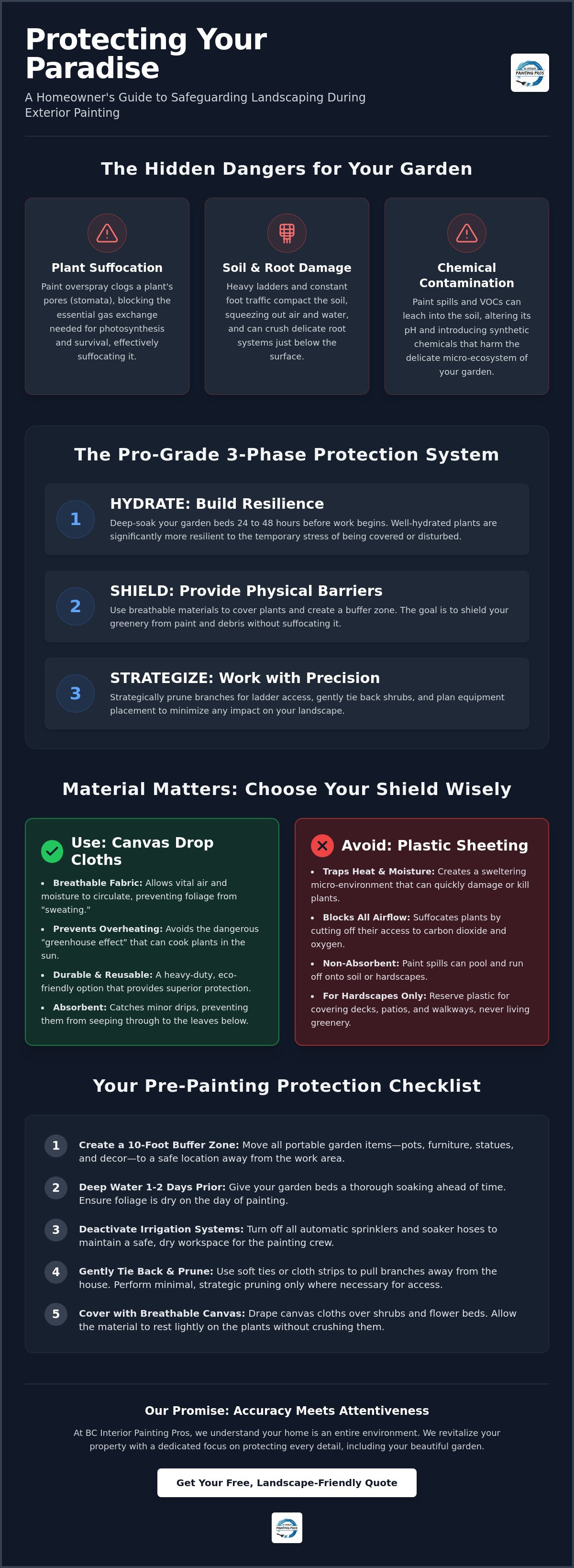
- Understand how paint overspray can block a plant's stomata, effectively preventing the essential photosynthesis needed for your garden to thrive.
- Learn the hydration strategy of deep-soaking your garden beds 24 to 48 hours before work begins to increase plant resilience against heat and coverage.
- Discover why canvas drop cloths are the superior choice for living greenery while plastic sheeting should be reserved strictly for hardscapes like decks.
- Master the professional steps of how to protect landscaping during exterior painting, starting with a clear 10-foot buffer zone for all portable garden ornaments.
- Explore the benefits of a "landscaping first" project checklist that ensures your home is revitalized with a dedicated focus on accuracy and attentiveness.
Understanding the Risks: Why Landscaping Protection Matters
Landscaping protection is the proactive process of shielding your organic property features from paint, dust, and physical damage. It's about more than just avoiding a mess. It's about preserving the vitality of your garden. When you're planning how to protect landscaping during exterior painting, you must consider the biological needs of your plants alongside the technical requirements of the renovation. A pristine paint job loses its appeal if the surrounding greenery is left withered or trampled.
Paint overspray presents a significant biological threat. While it might look like a few harmless speckles, these droplets can clog plant "pores," known as stomata. These microscopic openings are vital for transpiration and photosynthesis. When they're blocked, the plant essentially suffocates, leading to yellowing leaves or stunted growth. Additionally, the physical presence of a painting crew introduces the risk of soil compaction. Heavy ladders and constant foot traffic can crush delicate root systems and squeeze the air out of the soil, making it difficult for plants to absorb water and nutrients. This is especially true for the high-traffic areas immediately adjacent to your home's foundation.
The Impact of Paint Chemicals on Soil Health
Volatile Organic Compounds (VOCs) aren't just an indoor air quality concern. They can also affect the micro-ecosystem of your garden beds. If paint flakes or liquid spills mix with your mulch or topsoil, they introduce synthetic chemicals that can alter soil pH levels. This disruption can harm local Kamloops flora that are adapted to specific soil conditions. Professional crews prioritize accuracy and attentiveness by using eco-friendly prep methods and high-quality painter's tape to ensure that every drop of paint stays exactly where it belongs. Preventing chemical runoff during the pressure washing phase is equally critical to maintaining a healthy garden environment.
Physical Damage vs. Chemical Damage
It's vital to distinguish between mechanical damage, like broken branches from ladder placement, and chemical burns caused by spills. In the intense summer heat of the BC Interior, certain plants are particularly susceptible to stress. If you use plastic sheeting incorrectly, you risk creating a "greenhouse effect." This traps heat and moisture against the foliage, effectively "cooking" the plant in the sun. Learning how to protect landscaping during exterior painting requires a balance between physical barriers and the biological needs of your greenery. We focus on using breathable materials that shield without suffocating, ensuring your home's transformation doesn't come at the cost of your garden's long-term health.
The Hydration Strategy: Preparing Your Plants for the Heat
Well-hydrated plants act like biological sponges. They are significantly more resilient to the temporary stress of being covered, moved, or subjected to the increased activity of a renovation. When you are planning how to protect landscaping during exterior painting, the preparation truly begins at the root level. A plant that is already struggling with drought is far more likely to suffer if its access to light and air is restricted for even a few hours. By ensuring your garden is fully saturated before work begins, you provide a vital safety net for your greenery. Learning how to protect landscaping during exterior painting involves more than just physical barriers; it requires a deep understanding of plant biology and regional weather patterns.
Watering Schedules for Kamloops Summers
Kamloops is famous for its intense summer heat waves. Before your exterior painting Kamloops project kicks off, you should establish a specific watering timeline. Deep-soak your garden beds 24 to 48 hours before the painting crew arrives. This deep-soaking method encourages water to reach the lower root zones, providing a reservoir that the plant can draw from during the project. We recommend evening watering as the most effective strategy in the BC Interior. It allows for maximum absorption into the soil without the immediate evaporation caused by the afternoon sun. On the day of the project, keep your foliage dry. Wet leaves can cause protective covers to stick or trap heat, which may lead to fungal issues. Ensure all automatic irrigation systems are turned off while painters are actively working to maintain a safe, dry workspace.
Creating a Three-Foot Buffer Zone
A buffer zone is the critical 36-inch gap needed between your house siding and your greenery to ensure ladder safety and proper airflow for the drying paint. Professionals often emphasize the importance of pruning before painting to prevent branches from scratching fresh finishes or obstructing the crew. If branches are too large to prune, use soft twine to gently tie them back. Avoid using harsh wire or plastic ties, as these can cut into the bark and cause long-term damage. For climbing vines attached directly to the home, carefully detach them and lay them on a breathable drop cloth away from the foundation. This level of careful preparation allows our team to focus on the accuracy and attentiveness required for a flawless finish. If you need help identifying which plants need the most space, our local painting professionals can assess your perimeter during the initial site visit.
Choosing the Right Protective Materials: Canvas, Plastic, or Mesh?
Selecting the correct shielding materials is a technical decision that separates a standard job from a professional transformation. Not every tarp provides the same level of safety, and using the wrong material can lead to the very damage you're trying to prevent. When you're determining how to protect landscaping during exterior painting, you must match the material to the specific needs of the surface, whether it's a living shrub or a concrete walkway. High-quality supplies paired with expert execution ensure your greenery remains vibrant throughout the renovation process.
Canvas drop cloths are the gold standard for breathability and durability during exterior work. Unlike synthetic alternatives, canvas allows for natural air exchange, which is vital for maintaining the health of your plants while they are covered. They offer a significant weight that resists shifting under light breezes, providing a stable barrier against paint drips and debris. For smaller or more delicate flower beds, plywood "tents" offer a robust solution. By leaning two pieces of plywood together over a row of flowers, you create a rigid shield that protects against falling scrapings or heavy equipment without ever touching the plants themselves.
Plastic sheeting is an excellent choice for hardscapes, but it's dangerous for living plants. While a standard 8'x12' plastic drop sheet is cost-effective at approximately $5.69 CAD, its non-porous nature creates a heat trap. In the BC Interior sun, this can lead to rapid wilting or "burning" of foliage. Lightweight mesh or specialized landscape fabric provides a middle ground. These materials are perfect for shielding against overspray while allowing maximum air and light penetration during longer projects. Understanding how to protect landscaping during exterior painting means knowing when to prioritize the impermeable protection of plastic and when to opt for the breathability of fabric.
When focusing on your property's permanent structures, you can visit Cascade Outdoor Services for specialized insights into professional hardscaping and deck restoration.
When to Use Breathable Fabrics
Canvas is the preferred choice for large shrubs and hedges because it drapes securely without crushing the underlying structure. If you're looking for a short-term solution for delicate perennials, old cotton bedsheets work surprisingly well. They are light enough to avoid snapping stems but thick enough to catch stray paint droplets. Never leave heavy covers on your plants overnight in the Kamloops climate. Even breathable fabrics can trap excess moisture or restrict necessary gas exchange if left in place too long, potentially leading to mold or stress.
Protecting Hardscapes and Decks
Hardscapes like concrete patios and stone paths require a different level of attentiveness. Use heavy-duty plastic secured with high-quality painter's tape to create a liquid-proof seal around the base of your home. You can coordinate this protection with deck staining Kamloops services to ensure your entire outdoor living area is revitalized simultaneously. To manage the sudden wind gusts common in the Thompson Valley, secure your covers with heavy stones or sandbags rather than pinning them directly into the soil, which avoids damaging hidden irrigation lines or root systems.
Step-by-Step Guide to Shielding Your Garden
Protecting your property requires a logical sequence of actions that begins long before the first drop of paint is ever mixed. Learning how to protect landscaping during exterior painting involves a systematic approach that respects your garden's biology while facilitating a smooth renovation. We believe that a pristine home shouldn't come at the expense of a withered garden. By following a structured preparation routine, you ensure that our team can operate with the accuracy and attentiveness your home deserves. This process creates a safe environment for both our painters and your prized greenery.
The first step is to clear a generous perimeter around your home's foundation. Move all potted plants, garden furniture, and decorative ornaments at least 10 feet away from the work zone. This buffer provides the necessary clearance for ladder placement and gives our crew the freedom to move safely without risking a stumble into a flower bed. Once the area is clear, take a moment to wet down the soil and mulch immediately adjacent to the house. Saturated soil acts as a natural defense; it helps dilute any accidental paint spills, preventing chemicals from concentrating around the root systems of your plants.
When it's time to apply your protective covers, always start from the highest point of the plant and work your way down, securing the fabric at the base. It's vital to use "stand-off" supports or simple wooden stakes to keep heavy canvas tarps from resting directly on fragile stems. This creates a protective cage that shields against debris without crushing the plant's structure. To maintain plant health throughout the project, you must uncover your greenery immediately after the daily painting session ends. This allows the plants to cool down, access natural light, and absorb the evening dew, which is critical during the dry Kamloops summers. Understanding how to protect landscaping during exterior painting means managing these daily transitions with care.
Managing Overspray and Wind
Wind direction is a major factor in the Thompson Valley, especially when using spray applications. Our team always checks the wind before starting work to prevent drift from reaching your garden. We often employ a "shielding" technique where one person holds a specialized board to catch any stray mist while another applies the paint. Additionally, remember that pressure washing Kamloops homes requires special drainage considerations. We ensure that the runoff from cleaning doesn't pool in your flower beds, protecting your soil's delicate pH balance from excessive moisture or cleaning agents.
Post-Painting Cleanup for Landscaping
The cleanup phase is where our commitment to quality truly shines. When removing covers, we fold them inward to trap any dried paint chips or dust, ensuring they don't end up in your mulch. We perform a detailed inspection of the soil to catch any missed debris. Finally, we recommend a light rinse for your foliage. This simple step removes any settled construction dust, allowing your plants to breathe freely and look as revitalized as your newly painted home. If you want a team that treats your property with this level of respect, connect with our local painting experts today for a detailed estimate.
The BC Interior Painting Pros Approach: Accuracy Meets Attentiveness
We believe that a professional painting service should revitalize your entire environment, not just your siding. Your landscaping is a vital part of your home’s character and value; treating it as an afterthought is simply not an option for our team. When you choose us, you aren't just hiring a crew to apply paint. You're partnering with skilled artisans who view every project through a lens of total property respect. This dedication to excellence is similar to the high standards found at Rod Cameron Pools, where decades of experience in pool construction and renovation inform their approach to property transformations. Our commitment to quality means we integrate the strategies of how to protect landscaping during exterior painting into our core operational workflow, ensuring your gardens remain as vibrant as your new finish.
Every exterior project we undertake in Kamloops begins with a specialized "landscaping first" checklist. This isn't a generic set of rules; it's a technical protocol designed to identify high-risk areas before the first ladder is even unloaded. We prioritize the use of high-quality canvas drop cloths and specialized breathable barriers over cheap plastic alternatives. This focus on premium materials ensures that your shrubs and flower beds receive the light and air they need while remaining shielded from debris. Our team takes pride in this transparent approach, viewing property protection as a professional responsibility rather than a manual labor task.
Why Local Expertise Matters in Kamloops
Navigating the unique seasonal swings of the BC Interior requires more than just technical painting skill. With over 20 years of experience in the region, we understand how the intense Thompson Valley sun and sudden wind gusts can impact both paint application and plant health. We coordinate directly with homeowners to identify specific garden needs, whether it's a delicate heritage rose bush or a complex irrigation system. Our long-standing history in the community is built on reliability and the tangible value of a job well done. We maintain a clean, professional job site from start to finish, ensuring that our presence revitalizes your space without leaving a trace of mess behind.
Ready for a Transformation?
Achieving a pristine new look for your home shouldn't involve the anxiety of damaged greenery or toxic runoff. By choosing professional residential painting near me, you gain the peace of mind that comes from a team that values your garden as much as your home’s curb appeal. We combine high-end materials with expert execution to deliver results that stand the test of time. If you're ready to experience a service where accuracy meets attentiveness, we invite you to discover how we can bring your vision to life. Get a Free Painting Estimate in Kamloops Today and start your home’s professional transformation with total confidence.
Revitalize Your Home Without Risking Your Garden
You now have the professional strategies needed to ensure your home’s transformation doesn't come at the cost of your vibrant garden. By implementing a system of deep hydration, selecting breathable canvas over suffocating plastic, and maintaining a strict buffer zone, you protect your property’s health and value. Mastering how to protect landscaping during exterior painting is a technical skill that separates artisan-level results from a standard, messy job site. These steps provide the peace of mind that your greenery will remain as pristine as your new coat of paint.
With over 20 years of local Kamloops experience, our team brings a specialized focus to every project. We offer comprehensive exterior maintenance, including stucco repair and pressure washing, all executed with our signature commitment to accuracy and attentiveness. We treat your property with the respect of a skilled artisan, ensuring every detail is handled with care. Request Your Free Exterior Painting Quote in Kamloops today to start your home’s professional revitalization. Your property deserves a fresh look and a partner who values your landscape as much as your siding. We look forward to bringing your vision to life with quality results that last.
Frequently Asked Questions
Will paint fumes or overspray kill my grass?
Paint fumes won't kill your grass, but a heavy layer of overspray can certainly cause damage. If paint accumulates on the blades, it blocks the sunlight needed for photosynthesis and can stifle growth. Our team uses precision spraying techniques and breathable ground covers to ensure your lawn remains untouched and healthy throughout the project.
How long can I keep my plants covered during an exterior paint job?
You should only keep your plants covered while the painters are actively working. Keeping them shielded for more than eight hours can lead to heat exhaustion or moisture stress, especially in the Kamloops sun. We make it a priority to uncover all greenery at the end of every shift to allow for natural air circulation and dew absorption.
Do I need to move my outdoor furniture and potted plants myself?
We recommend moving small potted plants and lightweight furniture at least 10 feet away before the crew arrives. This prevents accidental damage and gives our team the room they need to work safely. For larger, heavy items, we can discuss specific prep requirements during your initial project walkthrough to ensure a clear workspace.
What happens if a painter accidentally spills paint on my garden?
If a spill occurs, the immediate response is to saturate the area with water to dilute the paint. Because we pre-soak the soil as part of our technical protocol, the paint is less likely to penetrate the root zone. Our artisans carry specialized cleanup kits to manage any rare accidents with total transparency and care.
Is it safe to pressure wash my house near my flower beds?
Pressure washing is safe for your flower beds if the technician uses controlled angles and proper drainage techniques. We focus the water stream on the house siding and away from the delicate soil. This prevents soil erosion and keeps cleaning agents from pooling in your garden beds, maintaining your soil's natural balance.
Can I use plastic tarps to cover my shrubs in the summer?
You should never use plastic tarps to cover shrubs during a Kamloops summer. Plastic traps heat and can literally cook your plants in under an hour of direct sunlight. We exclusively use breathable canvas drop cloths to provide protection without compromising the plant's internal temperature or health.
Should I prune my bushes before the painters arrive?
Pruning your bushes to create a 36-inch gap from your siding is highly recommended. This buffer zone is a critical part of how to protect landscaping during exterior painting. It prevents branches from touching wet paint and provides a stable, safe area for our ladders, ensuring a more accurate and efficient finish.
How do professional painters protect landscaping differently than DIYers?
Professional painters use a systematic "landscaping first" checklist that DIYers often overlook. We invest in high-end breathable materials and specialized masking tools rather than relying on cheap plastic. This artisan-level approach to how to protect landscaping during exterior painting ensures your property is revitalized with a focus on both accuracy and long-term health.


