
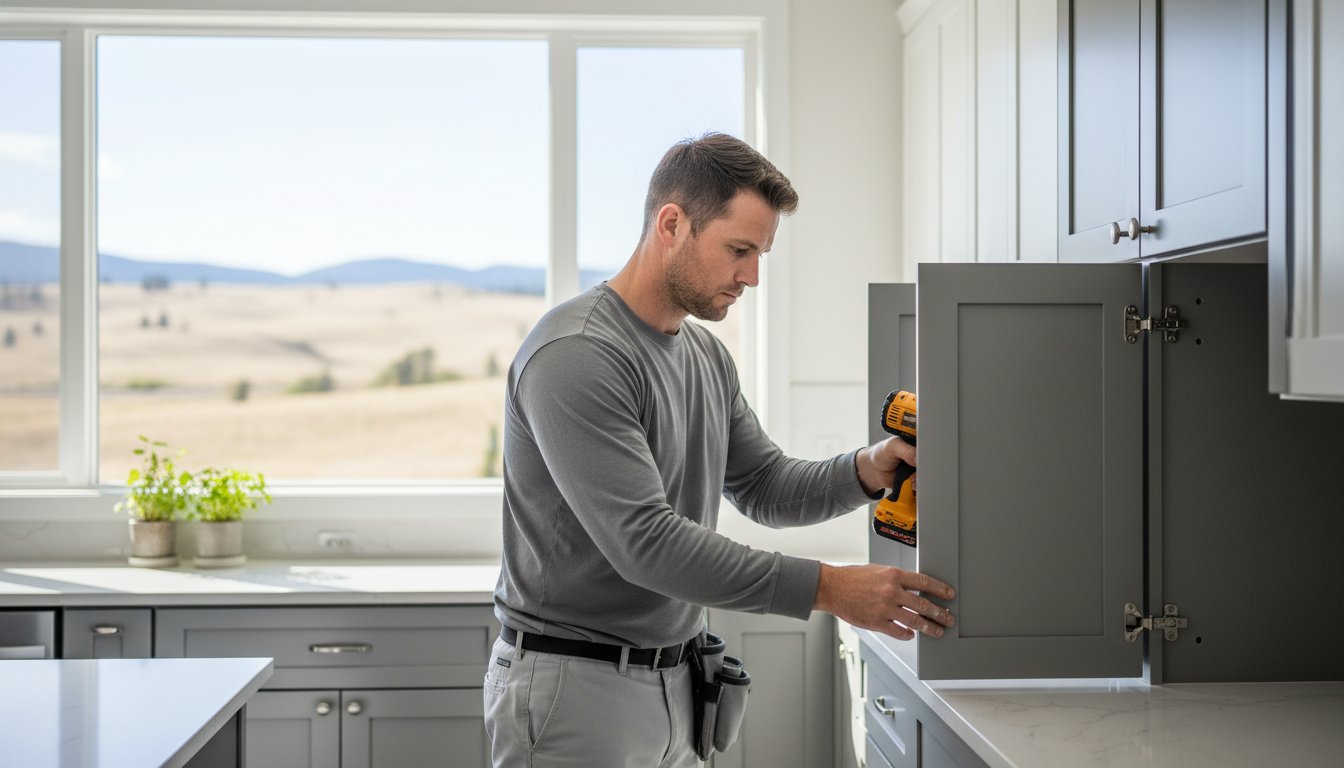
Most homeowners believe a fresh coat of paint is enough to modernize a kitchen, but a standard DIY approach often leads to peeling surfaces and visible brush marks within months. It's a common frustration to want a revitalized space while fearing the inevitable mess and disruption of a renovation. You deserve a kitchen that reflects your style without the lingering anxiety of a failing finish or a cluttered home.
Mastering the professional cabinet refinishing process step by step is the key to transforming your Kamloops home with a factory-grade result that lasts for years. This technical restoration goes far beyond a simple paint job. It involves industrial-grade decontamination and precision application to meet the high standards of a Level 5 finish. We'll guide you through the essential stages of preparation, the nuances of refinishing versus refacing, and why a full 21-day cure is vital for a durable, smooth surface. You'll discover how to achieve a sophisticated look that increases your home value while ensuring a seamless, professional experience from start to finish.
Key Takeaways
- Discover how to save 50% to 70% of the cost of a full kitchen replacement while still achieving a high-end, factory-grade aesthetic.
- Follow the professional cabinet refinishing process step by step to ensure every door and hinge returns to its exact location with systematic precision.
- Learn the technical importance of mechanical sanding and grain filling to transform porous wood surfaces into a smooth, minimalist profile.
- Understand why HVLP spraying and the "thin coat" philosophy are essential for creating a durable finish that resists fingerprints and daily wear.
- Master the critical difference between drying and curing times to protect your new surfaces during the vital 21-day hardening period.
Understanding Cabinet Refinishing: Is It the Right Choice for Your Kitchen?
Refinishing vs. Painting vs. Refacing
Standard painting is often a surface-level treatment that might hide flaws temporarily, but refinishing is a deeper restoration. While painting usually involves applying a product over an existing layer, refinishing requires a comprehensive guide to wood finishing to ensure the new coating bonds at a molecular level. Refacing involves replacing the doors and drawer fronts entirely, which is more costly and often unnecessary if your current frames are solid wood. Original solid wood cabinets, such as those made of oak or maple, offer a superior bond for new finishes compared to modern MDF. As you explore the cabinet refinishing process step by step, you'll see how we prioritize mechanical bonding and chemical adhesion to create a factory-grade surface that won't peel or chip.
The Long-Term ROI for Kamloops Properties
Enhancing your kitchen is one of the most effective ways to boost property value in the BC interior. A professional finish signals to potential buyers that the home has been maintained with accuracy and attentiveness. Our team of Expert Painters in Kamloops focuses on these technical details to ensure your renovation provides a stress-free experience and a tangible return on investment. We view every project as a professional service that honors the original craftsmanship of your home while bringing your modern vision to life. This balance of technical expertise and local reliability ensures your kitchen remains a centerpiece of the home for a decade or more.
Phase 1: The Critical Preparation and Decontamination Steps
The foundation of a factory-grade finish begins long before a spray gun ever touches a wood surface. Phase one of the cabinet refinishing process step by step focuses on meticulous organization and deep-level decontamination. We begin with a systematic deconstruction, removing every door, drawer front, and piece of hardware. To ensure a seamless reassembly, we utilize a detailed labeling system. This internal "map" guarantees that every hinge and door returns to its precise original location, maintaining the alignment and balance of your cabinetry once the project is complete.
Once the surfaces are clear, we address the invisible enemies of a durable finish: years of accumulated cooking oils, skin oils, and wax buildup. Standard cleaning simply isn't enough for high-end restoration. We employ a three-stage decontamination process to strip away these contaminants, ensuring the new coating has a pristine surface to grip. This level of attentiveness prevents the peeling and bubbling that often plague DIY projects. If you're planning a full kitchen transformation, working with a professional house painter ensures these technical details are handled with precision.
Industrial-Grade Degreasing
Standard dish soap lacks the chemical strength to break down the complex lipids found in a busy kitchen environment. We use industrial-grade degreasers that not only clean but also begin the chemical "etching" of the existing finish. This process creates a micro-profile on the surface, which is essential for establishing a strong mechanical bond. Our team follows strict safety protocols when handling these specialized cleaners, ensuring a safe residential environment while achieving the thoroughness required for a professional finish. Statistics from industry experts suggest that nearly 90% of coating failures are caused by invisible grease residue, making this step the most vital part of our workflow.
Masking and Containment
Creating a "clean room" within your home is vital for a stress-free renovation experience. We use zip-walls and heavy-duty floor protection to isolate the kitchen, preventing dust migration and overspray from affecting the rest of your living space. High-tier masking materials protect your appliances, countertops, and backsplashes with absolute accuracy. This containment strategy allows us to maintain a dust-free application zone while ensuring proper ventilation, protecting both the quality of the finish and the air quality in your home. By treating your kitchen as a controlled laboratory environment, we achieve a smooth result that rivals brand-new cabinetry.
Phase 2: Surface Restoration and Mechanical Bonding
Physical restoration begins once the decontamination is complete. This stage of the cabinet refinishing process step by step focuses on creating a perfect canvas for the new coatings. We use orbital and detail sanders to create a uniform profile across all surfaces. This mechanical sanding ensures the primer can achieve a permanent grip. We pay close attention to high-stress areas, such as the panels near dishwashers that often suffer from steam damage. We fill nicks and dents with specialized compounds that won't shrink or crack over time. Finally, we implement a strict tack cloth protocol. This removes every microscopic dust particle, ensuring a surgically clean surface before the first drop of primer is applied.
The Multi-Grit Sanding Process
We begin the sanding process with 100 to 120 grit to strip away the remaining old finish and level the wood. We then transition to a finer 220 grit to create a velvety texture. This progression is vital to avoid "burn through," where the sander cuts too deeply into delicate veneer edges. Hand-sanding ensures that intricate profiles and decorative curves receive the same level of mechanical bonding as flat surfaces, preventing the uneven wear often caused by aggressive machine-only work. This artisanal approach guarantees that every corner of your cabinetry is prepared to the same high standard.
Filling and Priming for Perfection
We select primers specifically designed to block tannins and prevent "bleed through," which is a common issue with light-colored finishes on woods like cherry or oak. High-performance wood fillers address structural imperfections without compromising the integrity of the wood. For homeowners exploring 2026 paint colour ideas for Kamloops homes, we often recommend Benjamin Moore ADVANCE for its exceptional leveling and local durability. This combination of superior supplies and expert skill ensures your kitchen transformation lasts for years and resists the yellowing or spotting that can occur with inferior products.

Phase 3: Professional Coating Application and The Factory Finish
Our team adheres to a strict "thin coat" philosophy. We apply multiple light layers rather than one heavy, sagging coat. This method builds a more resilient film that resists chipping and wear over time. Between each application, we perform inter-coat sanding with ultra-fine abrasives. This technical step ensures a professional feel to the touch, removing any microscopic textures that might have settled. It's the intersection of accuracy and attentiveness that separates a professional restoration from a basic paint job.
Spray Application vs. Hand Finishing
Choosing the Right Sheen and Product
Selecting the correct sheen is as important as the color itself. Satin finishes are currently the most popular choice for 2026 because they elegantly hide fingerprints and stand up well to frequent cleaning. Semi-gloss offers even more durability but can highlight minor surface imperfections. We utilize modern waterborne alkyds that provide the rock-hard durability of old-school oil paints with the safety and low VOC levels of water-based products. These coatings are specifically chosen to withstand Kamloops' seasonal light shifts, ensuring your colors don't fade or yellow over time. If you want to see how these high-end materials can revitalize your home, explore our residential painting solutions to start your transformation.
Curing, Reassembly, and Long-Term Cabinet Care
The final phase of the cabinet refinishing process step by step is the most rewarding, yet it requires the most patience from a homeowner. Many people mistakenly believe that once the cabinets are dry to the touch, they're ready for heavy daily use. In reality, modern coatings require a specific curing timeline to reach their maximum hardness. This chemical transition typically takes between 7 and 21 days to complete. We prioritize clarity during this stage, ensuring you understand that "dry" is merely a surface state, while "cured" represents the rock-hard durability you expect from a professional restoration.
Precision reassembly is where our systematic labeling from the initial phase pays off. We reinstall every door and drawer front using either your original cleaned hardware or the new upgrades you've selected. Our team focuses on final adjustments, ensuring perfect gaps, often called reveals, and smooth hinge operation. This attentiveness ensures your kitchen doesn't just look new; it functions with the mechanical precision of a high-end installation. We conclude every project with the Artisan’s Guarantee, a final walkthrough where we verify that every detail aligns with our rigorous quality standards and your vision for the space.
Managing the Kamloops Climate
The semi-arid climate in Kamloops presents unique conditions for the curing phase. While the dry air often accelerates surface drying, it can occasionally slow the deep-level curing of specialized waterborne resins. We recommend maintaining a steady indoor temperature between 18°C and 22°C for the first 48 hours after reinstallation. During this window, it's best to limit heavy cooking that produces excessive steam or airborne grease. By controlling the environment, you allow the finish to revitalize your space with a permanent bond that resists the seasonal shifts of the BC interior.
Maintaining Your New Finish
Preserving your factory-grade finish requires a "Soft Touch" approach to cleaning. You should avoid harsh chemicals, abrasive pads, or ammonia-based cleaners, as these can etch the new surface over time. For the first 30 days, treat your cabinets with extra care to prevent accidental chips while the film reaches its full structural integrity. A simple wipe with a damp microfiber cloth is usually all that's required for daily maintenance. For homeowners looking to extend this level of care to the rest of their property, our guide on Residential Painting Near Me offers expert advice on whole-home preservation and quality maintenance.
Transform Your Home with Professional Precision
A successful kitchen transformation relies on the intersection of technical skill and high-tier materials. We've detailed how meticulous decontamination, mechanical bonding, and the "thin coat" philosophy create a surface that stands the test of time. Understanding the cabinet refinishing process step by step empowers you to choose quality over quick fixes, ensuring your investment adds tangible value to your Kamloops property. This artisanal approach honors the original craftsmanship of your home while providing a sophisticated, modern aesthetic.
Our team brings over 20 years of local Kamloops experience to every project. We utilize specialized HVLP spray equipment to achieve that coveted factory finish, all while providing a comprehensive 100% satisfaction guarantee for your peace of mind. We don't just perform a service; we revitalize your environment with the accuracy and attentiveness of a skilled artisan. This commitment to quality ensures a stress-free renovation and a durable result you'll enjoy for years.
Ready to see the impact of expert craftsmanship in your own space? Revitalize your kitchen with a professional cabinet refinishing quote today. We look forward to helping you bring your vision to life with reliability and care.
Frequently Asked Questions
How long does the cabinet refinishing process take from start to finish?
A standard professional project usually takes between five and seven business days of active on-site work. This timeline includes the initial deconstruction, three-stage decontamination, and the multi-stage application of high-performance coatings. While the cabinets are reinstalled and ready for light use quickly, the full chemical curing process takes up to 21 days to reach maximum durability. We prioritize a steady rhythm to ensure your kitchen is revitalized with minimal disruption to your daily routine.
Can I use my kitchen while the cabinets are being refinished?
You'll have limited access to your kitchen during the active phases of the restoration. We create a "clean room" environment using zip-walls to contain dust and overspray, which restricts movement in the cooking area for several days. Once the doors are reinstalled, you can resume light use immediately. We recommend avoiding heavy cooking that produces excessive steam or grease for the first week to protect the fresh finish.
Will the paint on my cabinets peel or chip over time?
Professional refinishing prevents peeling by focusing on mechanical bonding and industrial-grade decontamination. Unlike a standard DIY project, our cabinet refinishing process step by step involves etching the old finish and applying specialized primers that create a permanent bond. This technical approach ensures the surface resists chipping even in high-traffic areas. To see how these professional standards are maintained in other locations, you can visit Cabinet refinishing Denver for more insights on durable kitchen finishes. We use rock-hard waterborne alkyds that provide the durability of oil with the safety of modern materials.
Is it better to spray or brush cabinets for a professional look?
Precision spraying with HVLP equipment is the undisputed standard for achieving a smooth, glass-like factory finish. Brushes and rollers always leave behind textures, such as stippling or visible brush marks, which can look dated and collect grime. We use high-end sprayers to ensure a uniform application that revitalizes your space with a sleek, modern aesthetic. This specialized focus provides a level of accuracy that manual application simply cannot replicate.
What is the difference between refinishing and just painting cabinets?
Refinishing is a technical restoration process that involves etching the existing finish to ensure a molecular bond with new coatings. Simple painting often involves applying a product directly over the old surface, which frequently leads to adhesion failure. The cabinet refinishing process step by step includes grain filling and multi-stage sanding to provide a durable, high-tier result. This artisanal approach transforms the foundation of your cabinetry rather than offering a temporary cosmetic cover-up.
How do I clean my refinished cabinets without damaging the surface?
Clean your new surfaces using a soft microfiber cloth dampened with warm water and a drop of mild dish soap. Avoid harsh chemical cleaners, abrasive pads, or ammonia-based products, as these can etch the finish over time. This "soft touch" rule is especially vital during the first 30 days while the coating completes its final curing stage. Regular, gentle maintenance ensures your kitchen remains a centerpiece of the home for years to come.
Do you need to take the cabinet doors off-site for refinishing?
We typically transport cabinet doors and drawer fronts to a specialized shop for precision spraying in a controlled, dust-free environment. This allows us to achieve a superior finish without the risk of airborne contaminants found in a residential setting. The cabinet frames are refinished on-site using the same high-end materials and containment protocols. This strategy ensures a perfect color match and a seamless, professional experience from start to finish.
Can you refinish cabinets that are already painted or have a dark stain?
We can successfully revitalize cabinets regardless of whether they have a dark original stain or a previous layer of paint. Our three-stage decontamination and multi-grit sanding process removes old residues and creates a pristine canvas for your new color choice. This allows you to transition from deep espresso tones to modern, soft neutrals with complete confidence. Our team focuses on thoroughness to ensure the new finish bonds perfectly to the existing structure.


