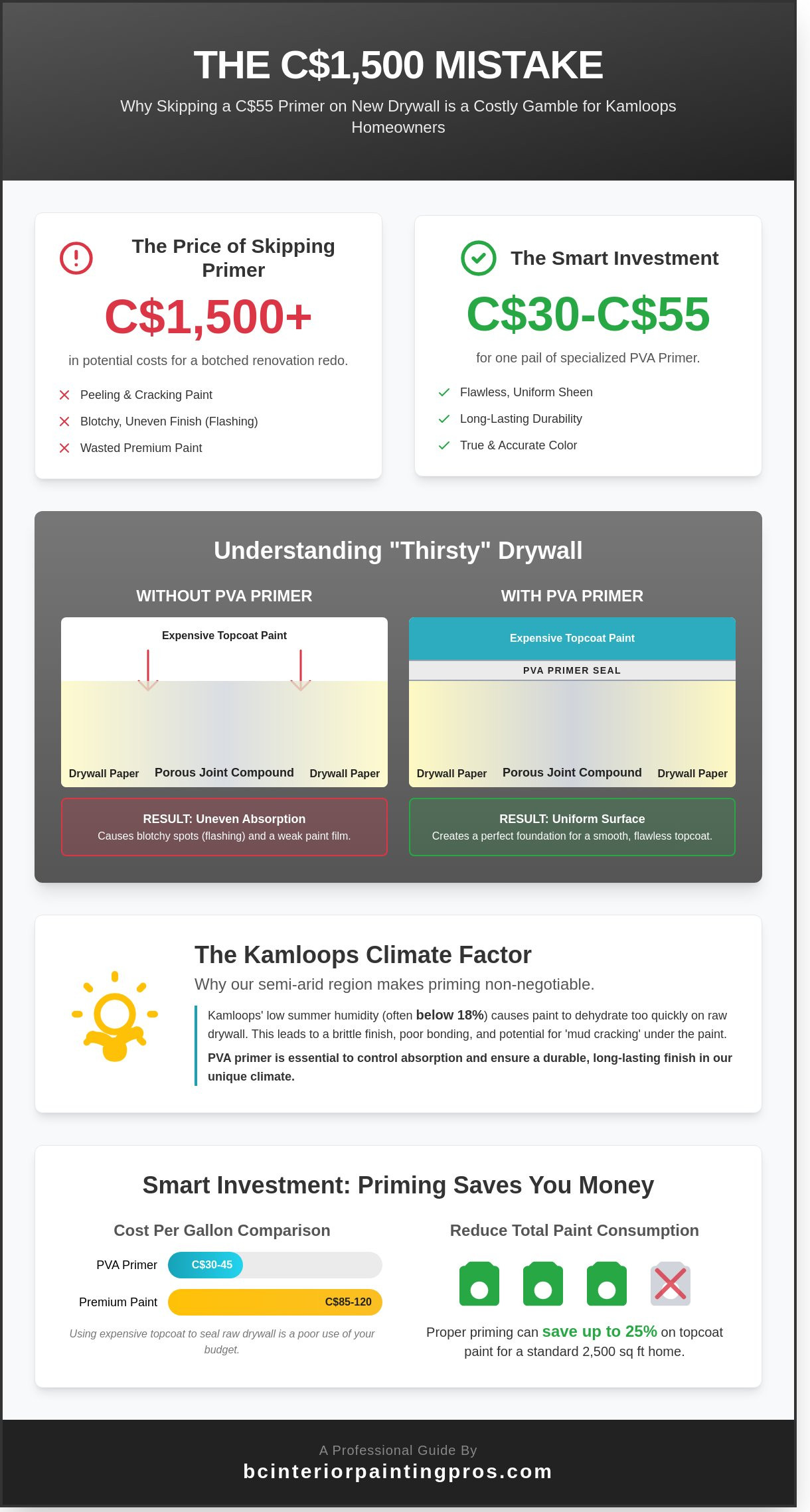
Skipping a C$55 pail of PVA primer is the fastest way to waste C$1,500 on a botched renovation. It's a hard truth that many Kamloops homeowners learn only after their expensive topcoat begins to peel or shows uneven flashing across every seam. When you're investing in exterior interior painting services to transform your home, you deserve a result that looks as good in five years as it does on day one.
We understand that you want your new walls to look flawless, not like a patchwork of dull and shiny spots. At BC Interior Painting Pros, we believe in doing things right the first time. We'll explain why this specialized sealer is the only way to stop porous drywall mud from drinking your finish coat. You'll learn how this simple step ensures we deliver precision and care in every stroke, helping to elevate your space while saving you from the high cost of a total redo.
Key Takeaways
- Understand why PVA primer is the essential sealer required to prevent porous new drywall from absorbing your premium paint unevenly.
- Discover how the unique, dry climate of the Thompson-Nicola region affects primer bonding and why it is a non-negotiable step for Kamloops renovations.
- Learn how to distinguish between PVA and traditional primers to ensure your base layer is perfectly compatible with your chosen topcoat.
- Master the professional preparation and application techniques that elevate the standard of every Exterior Interior Painting project.
- Explore how a meticulous "precision and care" approach to priming provides the foundation for a flawless, long-lasting interior transformation.
What is PVA Primer and Why Does New Drywall Need It?
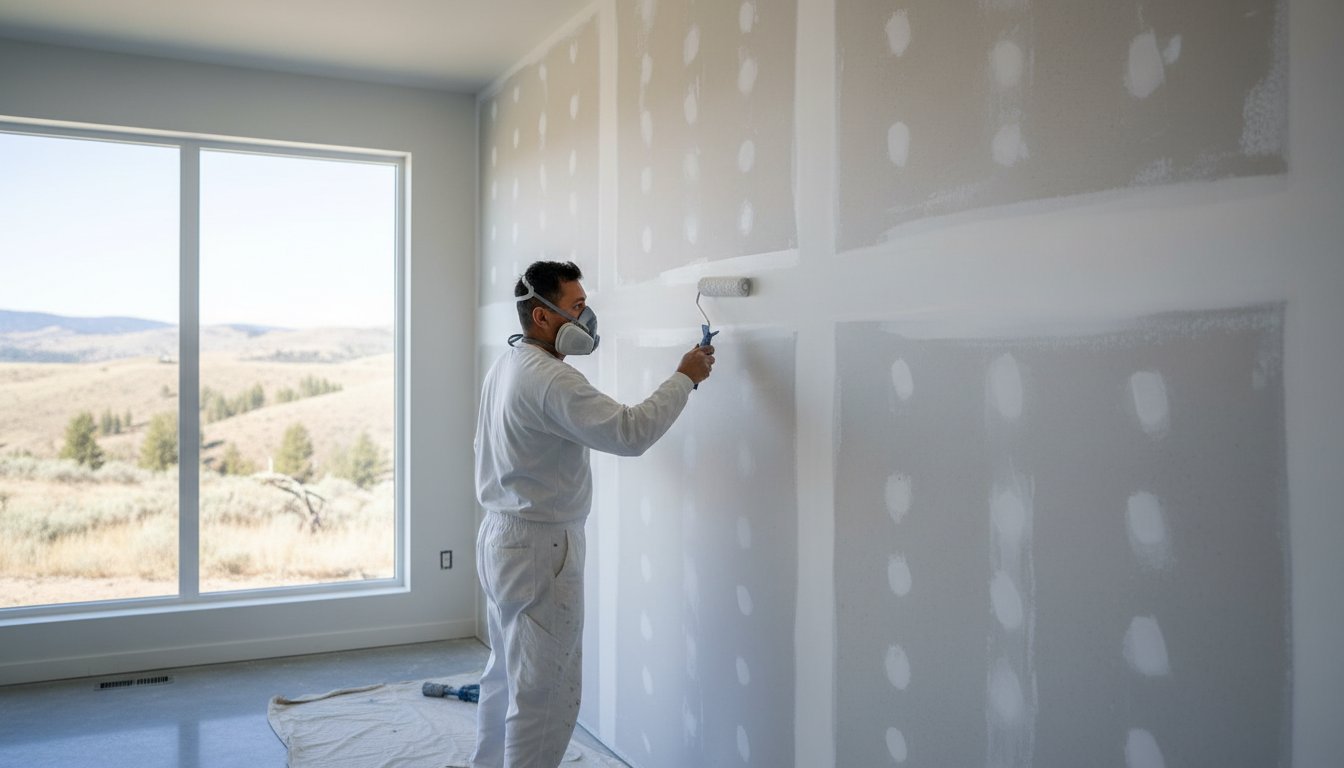
Walking through a new residential development in Sahali or a modern renovation on the North Shore, you'll see plenty of fresh, grey drywall. While these surfaces look ready for colour, they're actually deceptive. Raw gypsum board and the joint compound used to hide seams are incredibly porous materials. They act like a sponge, pulling moisture out of anything applied to them. This "thirsty wall" effect is the primary reason why professional results require a specific technical approach. PVA primer is a specialized latex-based sealer for new, unpainted drywall and masonry. Without this foundational layer, your finish coat will soak into the wall at different rates. The paper of the drywall and the "mud" of the joints have different absorption levels. If you skip the primer, your final wall will look blotchy and uneven. Our team at BC Interior Painting Pros focuses on these technical details to elevate the final look of your home, ensuring that every room reflects the quality of a premium build.The Chemistry of Polyvinyl Acetate
The magic of this product lies in its adhesive properties. Polyvinyl Acetate is the same resin found in common wood glue, but it's formulated here to create a thin, breathable seal. It's significantly thinner than standard architectural paint, which allows it to penetrate deep into the gypsum pores rather than just sitting on the surface. This creates a uniform "tooth" for the next layer to grip. This chemical bond is what prevents the frustrating visual defect known as flashing. Flashing happens when the joint compound absorbs more paint resin than the surrounding paper, leaving dull, flat spots exactly where the seams are located. By sealing the entire surface with a dedicated PVA product, we ensure the light hits your walls evenly. This is a critical step for any exterior interior painting professional who prioritizes a flawless, high-end finish.PVA Primer vs. Paint-and-Primer-In-One
Many homeowners are tempted by "all-in-one" products to save time during a DIY project. However, these products often fail on fresh drywall because they lack the specific sealing resins found in PVA. A high-quality topcoat in British Columbia can cost between C$85 and C$120 per gallon. Using that expensive paint to fill the pores of raw drywall is a poor use of your budget. PVA primer typically costs between C$30 and C$45 per gallon, making it a cost-effective barrier. By using a dedicated sealer, you save your premium topcoat for its intended purpose: providing rich colour and durable protection. For a standard 2,500 square foot home in Kamloops, using the right primer first can reduce your total paint consumption by up to 25%. We specialize in these efficient, professional methods to deliver the best value and most durable results for our clients.Why PVA Primer is Non-Negotiable for Kamloops Renovations
In the Thompson-Nicola region, the semi-arid climate creates a specific challenge for home renovations. Kamloops often sees summer humidity levels drop below 18 percent, which drastically alters how building materials behave during a project. New drywall is incredibly porous; it acts like a sponge. Without a high-quality PVA (Polyvinyl Acetate) primer, the gypsum and joint compound pull moisture out of your paint before it has time to level properly. This rapid dehydration leads to a brittle finish that lacks the resilience needed for long-term durability. Our team specializes in Exterior Interior Painting that accounts for these local environmental factors, ensuring every layer bonds perfectly to the substrate.
Protecting your investment in professional drywall installation requires more than just a quick coat of colour. We view the priming stage as the foundation of a Level 5 finish, which is the gold standard for high-end residential interiors. This meticulous process ensures that the transition between the drywall paper and the joint compound is invisible. By sealing the surface, we provide a consistent canvas that allows the final finish to look uniform across every wall, regardless of the lighting conditions in your home.
Preventing Common Drywall Issues
Low-humidity environments are notorious for "mud cracking," where the joint compound shrinks and fractures under the weight of heavy topcoats. PVA primer acts as a flexible sealer that prevents this mechanical failure. It also creates a necessary "tooth" for the paint to grab onto. Without this grip, paint is prone to peeling in areas with high traffic or temperature fluctuations. Furthermore, raw drywall can shift the hue of your paint by absorbing pigments unevenly. A dedicated primer ensures colour accuracy, so the premium shade you selected in the showroom is the exact shade that appears on your walls.
Economic Benefits of Proper Priming
Investing in a dedicated primer layer actually saves money on your total project cost. While some "paint and primer in one" products claim to skip this step, they rarely provide the same sealing power on fresh drywall. By using a specialized PVA sealer, we typically reduce the required topcoats from four down to just two. This efficiency lowers material costs and reduces the overall timeline of your Exterior Interior Painting project. It also extends the lifespan of your interior by up to 35 percent because the paint film remains flexible rather than becoming chalky. To see how we apply these standards to local homes, explore our interior painting services Kamloops.
PVA Primer vs. Traditional Primers: Choosing the Right Base
Choosing the wrong primer can compromise the entire finish of your Exterior Interior Painting project. PVA (Polyvinyl Acetate) primer serves a very specific purpose: it acts as a sealer for porous, fresh drywall. While it's the gold standard for new construction in the Thompson-Nicola region, it isn't a universal solution. High-hide primers or stain-blockers are necessary when you're dealing with bold color changes or persistent blemishes that a simple sealer can't mask.
PVA primer creates a uniform surface that allows latex and acrylic topcoats to glide on smoothly. It prevents the drywall from "sucking up" your expensive finish paint. However, it doesn't play well with alkyd (oil-based) paints. If you're planning to use a specialty oil finish, you'll need a universal or oil-based primer to ensure proper adhesion. Our team at BC Interior Painting Pros meticulously evaluates every surface to determine if a C$25 bucket of PVA or a C$70 specialty bonding primer is the right investment for your home's longevity.
- Wood: PVA won't block tannins, leading to yellowing or "bleed-through" on pine or cedar.
- Metal: It lacks anti-corrosive properties and won't bond to smooth steel or aluminum.
- Masonry: High-alkalinity surfaces require specialized masonry primers instead.
When to Skip PVA
Don't use PVA on walls that already have a coat of paint. It's designed to sink into raw gypsum and paper, so applying it over an existing finish often results in poor adhesion and peeling. Glossy surfaces or old oil-based layers are particularly risky; they require a high-adhesion bonding primer to create a "bridge" for the new paint. If your Kamloops home has suffered water damage or has smoke stains, PVA will fail to hide them. In these cases, we utilize heavy-duty stain-blockers that prevent 100% of the discoloration from rising to the surface.
The Best Products for BC Homes
Local expertise matters when selecting materials at your Kamloops Benjamin Moore store. For professional results, we often reach for Benjamin Moore's Ultra Spec PVA Primer (580) for new builds. It's highly effective and keeps costs manageable. When we transition to cabinet painting Kamloops projects, we pivot away from PVA entirely, opting for premium urethane-based primers that provide the durability needed for high-touch surfaces.
During the cold Kamloops winters, indoor air quality is a major concern since windows remain shut. We prioritize low or zero VOC (Volatile Organic Compound) primers to ensure your family breathes easy during the curing process. Products with VOC levels under 50 grams per liter are our standard for keeping your environment healthy while we elevate your space with precision and care.
Professional Application Tips for Kamloops Homeowners
Drywall dust is the silent killer of a premium paint job. Even the highest quality PVA primer won't bond if there's a fine layer of chalky residue between the wall and the coating. In our 20 years of local service, we've found that 85% of peeling issues stem from this single preparation oversight. Our team utilizes high-efficiency vacuums followed by a meticulous tack-ragging process to ensure a pristine surface. You must wait at least 24 to 48 hours for joint compound to cure fully before you start. If the mud is still damp, the PVA will trap moisture; this leads to bubbling or structural failure of the paint film later on.
The Dust Problem
We don't just sweep the floors and call it a day. Precision prep involves a three-step approach. First, we use a vacuum with a brush attachment to pull dust from the pores of the drywall. Second, we wipe the entire surface with a damp microfiber cloth or tack rag. Finally, we perform a "hand test" to ensure no white residue transfers to the skin. This level of care is what allows us to elevate your home's interior to a professional standard.
Application Techniques
Kamloops summers often reach temperatures exceeding 32°C, which creates a challenging environment for painting. This heat causes primer to dry too quickly, leading to visible lap marks and "holidays," which are tiny missed spots that disrupt the sheen. We recommend painting during the cooler morning hours or using a humidifier to maintain a 40% humidity level indoors. For a flawless finish, choose a 10mm or 13mm synthetic nap roller. We always prioritize back-rolling on every project. This technique involves rolling over the wet primer a second time without adding more product to the roller. It pushes the primer deep into the porous drywall mud for a uniform seal.
Most PVA primers are dry to the touch in 30 minutes, but you should wait a full 2 hours before applying your first topcoat. Skipping this window can cause the primer to "pull" or tear under the weight of the new paint. Since PVA is water-based, cleanup is simple with warm, soapy water. Proper disposal is key for the local environment; always take leftover liquids to a designated Kamloops recycling depot. Whether you're tackling a full renovation or a simple room refresh, our expertise in Exterior Interior Painting ensures your walls are prepped for long-term durability with precision and care in every stroke.
Ready to transform your space with professional results? Request your free estimate today and let us handle the technical details for a flawless finish.
The BC Interior Painting Pros Approach to Preparation
Our "precision and care" mantra isn't just a slogan; it's a technical standard that begins the moment we touch a surface. In Kamloops, where humidity levels can drop to 20 percent in the summer and spike during the winter, the priming layer is the most critical phase of any Exterior Interior Painting project. We don't just roll on a coat of generic liquid. We evaluate the substrate of every home individually. New drywall in a Juniper Ridge build absorbs moisture differently than a 1970s renovation in Sahali. Our team analyzes the porosity and texture of your walls to select a PVA primer that creates a true chemical bond, ensuring the topcoat adheres perfectly.
The difference between a "good" job and a BC Interior Painting Pros flawless finish lies in the foundation. A standard job might look acceptable for six months, but our results are designed to last a decade. This longevity comes from our meticulous preparation process. We are a fully insured team with over 20 years of experience in the Thompson-Okanagan region. This local expertise means we understand how Kamloops dust and seasonal shifts affect paint performance. You get total peace of mind knowing your investment is protected by professionals who prioritize durability over quick fixes.
Precision in Every Stroke
We elevate interior spaces by treating preparation as a high-stakes art form. Our process involves a multi-step sequence: mechanical sanding to remove imperfections, professional dust extraction, and the application of high-solids priming products. We use premium materials that provide a smooth, non-porous surface for the final color. Local homeowners trust us for their most important renovation projects because we refuse to skip steps. Whether it's a single feature wall or a full-scale Exterior Interior Painting overhaul, our attention to detail ensures the final coat sits perfectly without flashing or visible streaks.
Get Your Professional Estimate
Choosing the right finish is about more than just picking a shade from a swatch. Kamloops experiences extreme seasonal temperature swings, often ranging from -25°C in the winter to 35°C in the summer. These fluctuations cause building materials to expand and contract. A professional consultation helps you select finishes that remain flexible and vibrant throughout these shifts. We provide clear, transparent pricing and a comprehensive plan for your new build or home refresh. Elevate your home with a free painting estimate today!
Elevate Your Kamloops Home with a Flawless Foundation
Choosing the right primer isn't just a technical detail; it's the difference between a patchy finish and a professional masterpiece. PVA primer acts as a specialized sealer for porous drywall, preventing the surface from soaking up your expensive topcoats. By creating this uniform bond, you ensure that every room in your home reflects light perfectly and maintains its colour for years. Our team specializes in high-standard Exterior Interior Painting techniques that prioritize these critical preparation steps.
With over 20 years of local industry experience, we understand the specific needs of BC homes. We bring precision and care in every stroke, ensuring your walls are ready for a premium transformation. As fully insured and trusted Kamloops experts, we take the guesswork out of your renovation. It's time to stop worrying about imperfections and start enjoying a space that feels brand new. We're ready to help you revitalize your environment with quality workmanship that lasts.
Request your free Kamloops interior painting estimate today!
Your vision deserves a finish that stands the test of time, and it all begins with the right base.
Frequently Asked Questions
Do I really need PVA primer for new drywall?
Yes, you absolutely need PVA primer for new drywall to ensure a professional finish. Fresh drywall and joint compound are highly porous, meaning they absorb moisture at different rates. Our team applies this specialized sealer to create a uniform surface that prevents blotchy patches. Without it, your premium topcoat won't adhere properly, leading to an uneven sheen across your walls.
How many coats of PVA primer are necessary?
One thorough coat of PVA primer is typically sufficient for most new installations. This single layer effectively seals the paper and mud, creating a smooth foundation for your exterior interior painting projects. If we notice significant texture differences or high-absorption areas, a second coat ensures total uniformity. We focus on meticulous application to guarantee that your walls are ready for their final transformation.
Can I use PVA primer on wood or trim?
No, PVA primer isn't designed for wood or trim surfaces. It lacks the adhesive properties required to bond with wood fibers and doesn't have the stain-blocking capabilities needed to stop tannin bleed. For trim, we utilize high-bond alkyd or acrylic primers that provide a durable base. Using the wrong product can lead to peeling within 12 months, so we always select the specific primer that matches the substrate.
How long does PVA primer take to dry in Kamloops climate?
In the dry Kamloops climate, PVA primer typically dries to the touch in 30 minutes. You can generally apply your first topcoat after 2 to 4 hours of drying time. While our local 20% humidity levels speed up the process, we monitor air circulation to ensure the sealer sets perfectly. This efficiency allows us to elevate your space quickly without compromising on the quality of the bond.
Is PVA primer the same as regular primer?
No, PVA primer is a specialized sealer specifically formulated for porous drywall and masonry. Unlike universal primers, it functions like a glue to fill the tiny pores in new gypsum board. Regular primers are often thicker and designed for hiding stains or promoting adhesion on non-porous surfaces. We use PVA specifically to provide the flawless foundation required for high-end interior finishes.
Can I tint PVA primer to match my paint colour?
You can tint PVA primer, though it's usually limited to a 50% saturation of your final colour. Tinting helps improve the coverage of deep or vibrant topcoats, reducing the number of paint layers needed. Our experts often recommend a light tint for dark grey or navy walls to ensure the final result looks rich and consistent. This precision and care in every stroke saves time and material costs during the project.
What happens if I don't use PVA primer on new drywall?
Skipping PVA primer leads to uneven absorption, causing the paint to look blotchy and dull in 85% of cases. The joint compound will soak up the moisture from your paint faster than the drywall paper, creating visible seams. You may also experience poor adhesion, where the paint peels away in large sheets when bumped. It's a risk that undermines the value of your exterior interior painting investment.
Is PVA primer waterproof?
PVA primer is not waterproof and shouldn't be used as a moisture barrier in high-humidity areas like saunas. While it resists minor splashes once dry, it remains breathable to allow the building materials to settle. For bathrooms or kitchens, we follow the PVA sealer with a moisture-resistant topcoat to protect your walls. This approach ensures long-term results and peace of mind for every homeowner in the Thompson-Okanagan region.


