
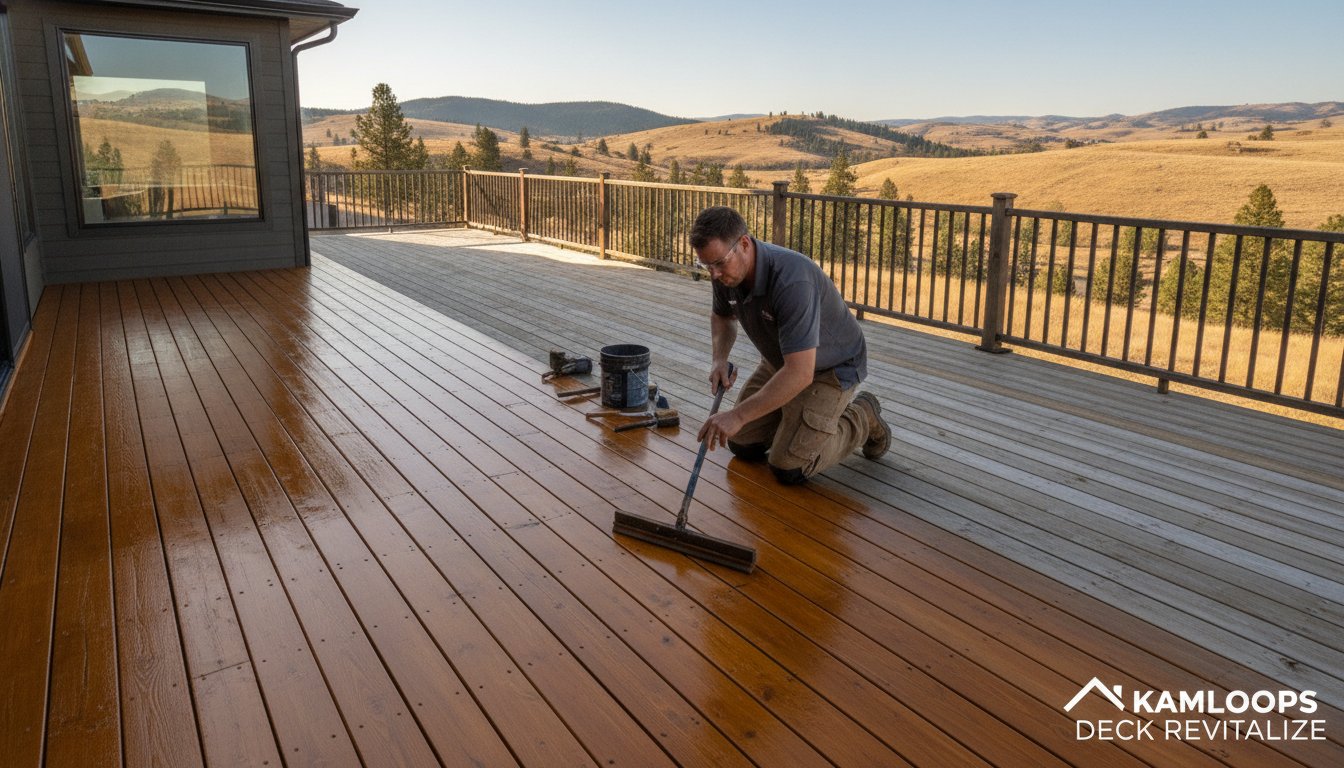
Your premium cedar deck isn't just an outdoor space; it's a living investment that the intense Kamloops sun is actively trying to reclaim. We understand the frustration of watching a beautiful, honey-hued finish turn grey and brittle after just one season of our semi-arid heat. It's exhausting to deal with peeling surfaces that require constant scraping and sanding. When it comes to cedar deck staining Kamloops homeowners often find themselves caught between products that don't penetrate and local weather that doesn't quit.
This guide provides the professional strategies you need to defend your wood against extreme temperature swings and UV radiation while ensuring a finish that lasts. We'll explore the critical differences between oil and water-based treatments, the importance of deep-penetrating formulas, and the exact maintenance schedule required for long-term peace of mind. By prioritizing accuracy and attentiveness during the preparation phase, you can revitalize your outdoor environment and ensure it remains a source of pride. We'll show you how to implement the latest 2026 preservation cycle every two to three years to keep your cedar vibrant and structurally sound.
Key Takeaways
- Master the "breathable" protection techniques necessary to prevent cedar rot and fiber stress in our unique semi-arid climate.
- Follow a disciplined 5-step restoration process that prioritizes structural integrity and careful wood fiber removal over quick fixes.
- Select the perfect semi-transparent finish for cedar deck staining Kamloops to achieve maximum UV resistance without hiding the natural wood grain.
- Avoid premature stain failure by timing your application to bypass the "Flash Dry" risks associated with intense local heatwaves.
- Discover how professional-grade materials and precision tools create a durable, uniform finish that big-box retail products cannot replicate.
Why Cedar Decks Require Specific Care in Kamloops
Cedar is a masterpiece of nature, but it's also a delicate softwood that demands specialized attention. Unlike denser hardwoods or chemically treated lumber, cedar relies on its porous cell structure to regulate moisture. For successful cedar deck staining Kamloops homeowners must understand that this wood requires "breathable" protection. If you apply a thick, film-forming product, you risk trapping moisture within the grain, which leads to internal rot even if the surface looks fine.
Our semi-arid climate creates a relentless cycle of stress for wood fibers. The intense heat of July causes the wood to contract sharply, while the sudden spring thaws force moisture into every microscopic pore. This constant expansion and contraction eventually causes the wood to check and split. Understanding what wood stain is and how its pigments interact with organic fibers is the first step in long-term preservation. High-quality stains don't just sit on top; they penetrate the surface to replace the natural thujaplicins—the cedar oils—that dissipate under the sun's glare.
That classic silver patina isn't just an aesthetic choice; it's a warning. Silvering indicates that UV radiation has successfully dissolved the lignin, which is the natural glue holding the wood fibers together. Once this breakdown occurs, the wood becomes brittle and prone to deep cracking. We view every staining project as a technical restoration of this structural integrity.
The Impact of Kamloops UV Radiation
Kamloops sits at a higher elevation with remarkably clear skies, which significantly increases the intensity of UV radiation. These rays act like sandpaper on a microscopic level, stripping away the vibrant reds and ambers of premium cedar. Clear sealers often fail within six months in the BC Interior because they lack the necessary pigments to deflect these rays. Without a pigmented barrier, your deck remains defenseless against the sun's appetite for lignin, turning premium timber into brittle grey wood in a single season.
Tannin Bleed and Moisture Management
Cedar contains high concentrations of tannins, the natural chemicals that provide rot resistance. However, when moisture is mismanaged, these tannins can migrate to the surface and create unsightly dark stains or "bleed." Using the wrong product can trap this moisture, leading to a swampy environment beneath the stain's surface. Maintaining cedar’s dimensional stability requires a product that allows water vapor to escape while preventing liquid water from soaking in. This balance is what keeps your deck boards flat, true, and free from warping over the decades.
Our 5-Step Cedar Restoration and Staining Process
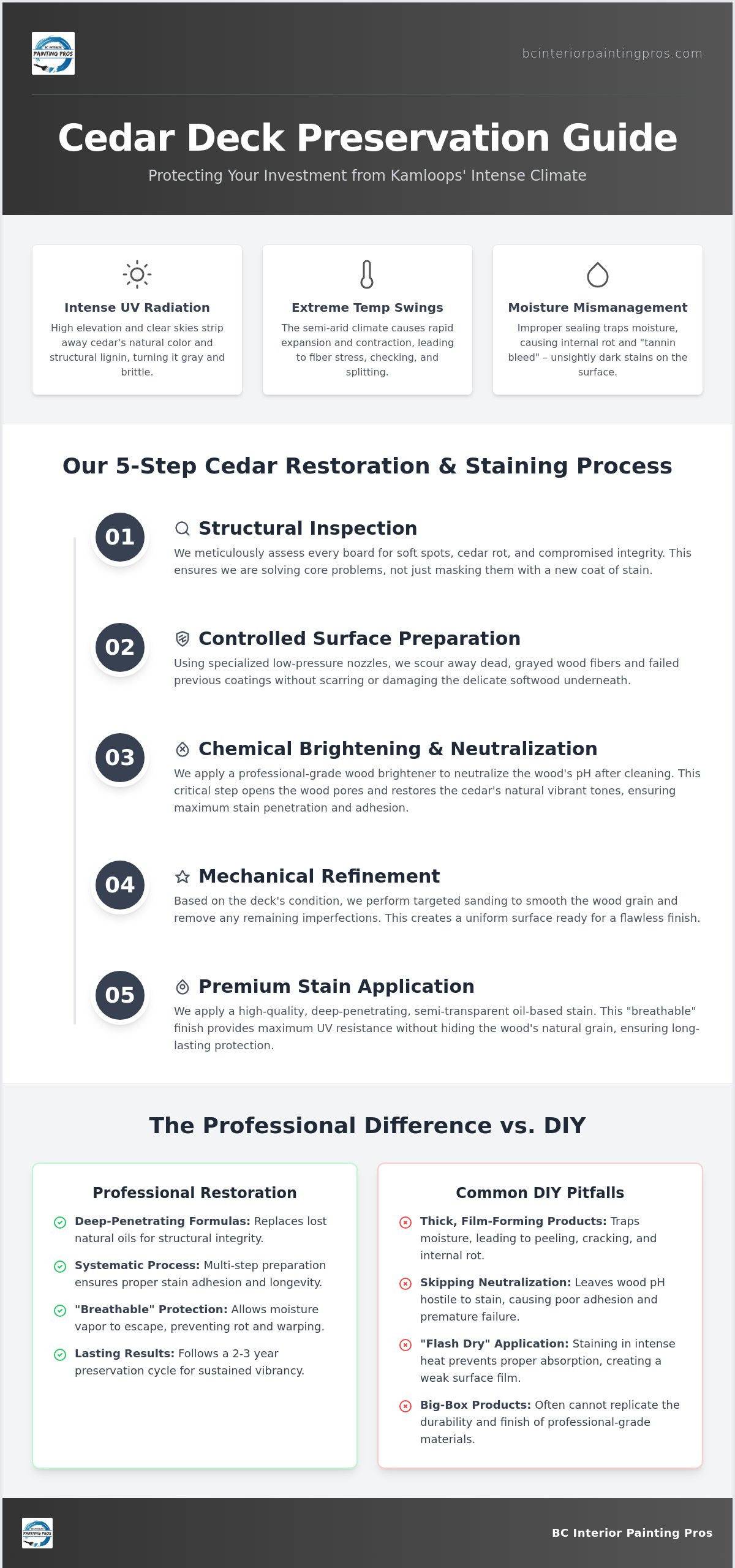
High-tier quality starts with a meticulous assessment of your deck's current state. We begin by inspecting every board for "cedar rot," soft spots, and compromised structural integrity. This professional service focuses on identifying issues before they're buried under a fresh coat of pigment. For premium cedar deck staining Kamloops residents can trust, this initial step ensures we aren't just masking problems but solving them. We then move to a controlled pressure washing phase, where we use specialized nozzles to scour away dead wood fibers and grayed surface cells without scarring the delicate softwood underneath.
Once the surface is clean, we transition into chemical treatment and mechanical refinement. This phase is where the intersection of accuracy and attentiveness truly shines. We don't believe in quick fixes that peel after a single season. Instead, we use a systematic approach to prepare the wood’s cellular structure for long-term bonding. If you want to see how these professional methods compare to standard DIY approaches, you can explore more in-depth guides on our painting and restoration blog.
The Critical Importance of Brightening
Washing a deck removes dirt, but it often leaves the wood in an alkaline state that's hostile to stain adhesion. We apply a professional-grade wood brightener to neutralize cleaners and restore the cedar's natural pH. This chemical reaction "wakes up" the wood grain, opening the pores and highlighting the vibrant natural colors hidden beneath the weathered exterior. It follows the science-backed principles found in this authoritative guide on deck finishes, ensuring the wood is biologically ready to accept new protection.
Sanding vs. Stripping: Making the Right Call
We evaluate whether your deck requires mechanical sanding or chemical stripping based on previous coatings. If a failing film-former is present, precision sanding is often necessary to remove the "plastic" layer and create a proper "tooth" for the new stain to grab onto. We are careful to avoid over-sanding, which can burnish the wood and close the pores. Our goal is a uniform, absorbent surface that allows for maximum penetration of high-end oils.
The final step is the expert application of the stain using a "wet-on-wet" technique. We apply a generous first coat and follow up with a second while the wood is still damp with the product. This ensures the oils saturate the wood fibers deeply rather than just drying on the surface. This method effectively works to revitalize your outdoor space, providing a rich glow that stands up to the Kamloops heat. For those planning a full exterior update, our team also provides expert residential painting services to complement your newly restored deck.
Choosing the Best Stain for Kamloops’ Climate
Selecting the right chemistry is just as critical as the meticulous preparation steps we've previously detailed. For cedar deck staining Kamloops projects, the choice often boils down to balancing the visibility of the wood grain with the necessity of UV defense. Transparent stains offer the highest aesthetic appeal by showcasing the natural timber, yet they provide the least amount of protection against our high-elevation sun. Conversely, solid stains act more like paint; they hide imperfections on older decks but sacrifice the natural beauty of the cedar in the process.
We typically recommend semi-transparent stains as the "Goldilocks" solution for local homes. These products contain enough pigment to block harmful rays while allowing the unique texture of the wood to shine through. It's a technical mistake to use film-forming stains on cedar. Because cedar is a porous softwood that breathes, any product that creates a hard shell will eventually crack and peel as the wood moves. This leads back to the microscopic structural breakdown we've identified as a major pain point for homeowners in the BC Interior.
Oil-Based vs. Water-Based Stains
Oil-based formulas remain our preferred choice for the high-heat Thompson-Okanagan summers. They excel because they penetrate deep into the wood fibers rather than sitting on the surface. This deep saturation makes future maintenance much simpler; you can often re-apply a fresh coat without the need for aggressive chemical stripping. While water-based stains are environmentally friendly and offer faster drying times, they often struggle with the extreme thermal expansion common in our region. For long-term reliability and a finish that won't peel, penetrating oils are the superior technical choice for cedar deck staining Kamloops services.
Understanding Pigment Load and UV Protection
The relationship between the tint of your stain and its longevity is direct. More pigment means a better defense against the sun. We often suggest "Cedar" or "Amber" tones because they utilize trans-oxide pigments. These microscopic particles act as a "sunscreen" for your wood. To understand why this is necessary, you can look at the science behind wood degradation, which highlights how UV absorbers and water repellents work in tandem to prevent cellular breakdown. By choosing a product with a high pigment load, you're investing in a shield that protects the lignin from dissolving under the relentless Kamloops sky.
Maintenance and Timing: The Kamloops Cedar Calendar
In the Thompson-Okanagan, timing your restoration is just as vital as the product you choose. Because of our unique high UV index and low humidity, cedar deck staining Kamloops projects require a strategic window of opportunity. If you apply stain during a 35°C heatwave, you face the "Flash Dry" risk. This occurs when the solvent evaporates before the oils can penetrate the wood fibers. The result is a surface-level film that will inevitably peel within months. We schedule our professional applications when temperatures are moderate and the wood is in a state of "equilibrium moisture content."
Consistency is the secret to a deck that never needs a full, aggressive strip. We recommend establishing a 2-3 year maintenance cycle. You can check your deck's health at home with a simple water drop test. Pour a few tablespoons of water onto various parts of the deck. If the water beads up, your protection is still intact. If it soaks into the wood within seconds, the cellular structure is thirsty and vulnerable to UV breakdown. Catching it at this stage allows for a simple "clean and recoat" rather than a labor-intensive restoration.
Spring vs. Fall Staining Windows
Late spring, specifically May and early June, is the peak season for deck work in BC. The wood has dried out from the winter snowpack, but the extreme summer heat hasn't yet arrived. This allows the stain to cure slowly and deeply. Alternatively, September offers a second window. Autumn staining protects your investment before the heavy winter snow sits on the surface for months. We monitor overnight temperatures closely during these periods. Most high-end penetrating oils require at least 48 hours where temperatures don't dip below 10°C to ensure the chemical bond is permanent.
Winter Protection for Your Cedar Investment
Kamloops winters place immense moisture pressure on cedar. When snow sits on the boards, it forces water into the grain through constant freeze-thaw cycles. Never use salt or chemical ice-melts on your stained deck. These abrasive substances can pit the wood and strip the protective oils. Instead, use a plastic shovel and clear debris like pine needles or leaves promptly. Trapped organic matter holds moisture and promotes spring mold growth, which can compromise the work we've done. If you're ready to protect your outdoor living space from the elements, contact our local painting team for a professional assessment.
Why Professional Cedar Staining Outlasts DIY Efforts
While a weekend DIY project seems cost-effective, the technical reality of cedar deck staining Kamloops often proves otherwise. Professional artisans bring access to high-end penetrating oils that aren't available on big-box store shelves. These commercial-grade products contain superior UV inhibitors and anti-fungal agents designed specifically for the Thompson-Okanagan's climate. Our team utilizes precision equipment, including high-volume low-pressure sprayers and specialized back-brushing tools, to ensure an even application. This eliminates common DIY pitfalls like lap marks, puddling, or uneven absorption that can lead to premature failure.
The true value of professional service lies in the longevity of the wood itself. By executing a thorough, technically accurate preparation phase, we extend the life of your premium cedar by years. This proactive care prevents the need for costly structural repairs or board replacements down the road. We view our work as a long-term investment in your property's value, a principle also championed by Cardwell Property Services Inc. in their property maintenance and construction work. With over 20 years of local experience, we understand exactly how cedar behaves in our region, ensuring that cedar deck staining Kamloops services provide both beauty and structural defense.
The BC Interior Painting Pros Guarantee
Our commitment to the intersection of accuracy and attentiveness defines every project we undertake. We don't just apply a finish; we work to revitalize your outdoor space, transforming it into a welcoming environment for your family. This approach ensures that every square inch of your deck receives the specialized focus it deserves. For a broader look at how we protect your home, explore our Exterior Painting Kamloops guide to see how we maintain lasting curb appeal across all surfaces.
Revitalizing Your Home’s Curb Appeal
A perfectly stained cedar deck acts as the anchor for your home's exterior aesthetic. We ensure the tones and finishes complement your siding, trim, and landscaping to create a cohesive look. Our expert painters in Kamloops bring deep local credibility to every job, prioritizing long-term results over quick fixes. We believe in total transparency, which is why we provide detailed, cost-transparent quotes that outline exactly what your project requires. It's time to discover how professional execution can bring your vision to life and provide the peace of mind that comes with a job well done.
Protect Your Investment With Professional Artisan Care
Preserving a premium cedar deck in the BC Interior requires more than a quick coat of paint. It demands a technical understanding of wood cell structure and the relentless Kamloops sun. By following a specialized restoration process that prioritizes pH balancing and deep-penetrating oils, you stop the cycle of UV breakdown and peeling. We've seen how the intersection of accuracy and attentiveness transforms a graying, brittle deck into a vibrant centerpiece for your home. This commitment to high-tier quality ensures your outdoor space remains a place of peace and beauty rather than a source of maintenance stress.
Our locally owned and operated artisan team brings over 20 years of local experience to every project. We take pride in delivering long-term results that big-box store products simply cannot match. If you're ready to secure the future of your timber with expert cedar deck staining Kamloops services, we're here to help. Get a Free Cedar Deck Staining Estimate in Kamloops Today and let us bring our specialized focus to your next project. Your deck is a significant investment; we'll help you keep it looking spectacular for years to come.
Frequently Asked Questions
Is it better to brush or roll stain on a cedar deck?
Brushing is the most effective method for ensuring deep penetration into cedar's porous grain. While rolling is faster, it often leaves the product sitting on the surface rather than reaching into the wood fibers. We always recommend back-brushing after rolling or spraying to work the oils deep into the timber. This technique ensures a uniform finish without puddling, providing the high-tier quality that prevents premature failure in our dry climate.
How long does a cedar deck need to dry after pressure washing before staining?
You should wait at least 48 hours of dry weather after pressure washing before beginning your project. Cedar is highly absorbent and traps moisture deep within its cellular structure. If you stain too early, that moisture becomes trapped, leading to internal rot and peeling. We use moisture meters to confirm the wood is below 15 percent moisture content, ensuring the wood is ready for successful cedar deck staining Kamloops.
Can I stain a brand-new cedar deck immediately after installation?
You shouldn't stain brand-new cedar immediately because of "mill glaze," which is a shiny compression layer created during the milling process. This layer acts as a barrier that prevents stain from penetrating. You must either let the wood weather for several weeks or perform a light sanding and brightening treatment. This professional preparation opens the pores, allowing the protective oils to saturate the wood effectively from day one.
Why is my cedar deck stain peeling only a year after application?
Peeling usually occurs because a film-forming stain was applied over wood that was either too damp or poorly prepared. Unlike penetrating oils, film-formers sit on top of the wood like a thin layer of plastic. When the cedar expands and contracts during a Kamloops winter, this layer cracks and loses its bond. Proper chemical cleaning and pH balancing are the only ways to prevent this frustrating cycle of failure.
What temperature is too hot for staining a deck in Kamloops?
Avoid staining when surface temperatures exceed 30°C or when the deck is in direct, midday sunlight. Intense heat causes the solvents in the stain to evaporate too quickly, a process known as "flash drying." This prevents the oils from soaking into the wood, leaving a sticky residue that won't cure properly. We prefer early morning applications to ensure the wood remains cool during the critical absorption phase.
How many coats of stain are required for cedar?
Most high-end penetrating stains require one or two coats applied using a "wet-on-wet" technique. You apply the second coat while the first is still damp to maximize saturation. Over-applying stain is a common mistake that leads to a tacky, shiny surface that won't dry correctly. The goal is to fill the wood fibers with protective oil, not to build a thick, artificial layer on the surface.
Can I change the colour of my cedar deck from dark to light?
Changing from a dark to a light color is possible, but it requires a full restoration back to raw wood. This involves using a professional-grade chemical stripper to dissolve the old pigment followed by a brightening treatment and precision sanding. Because cedar is a softwood, this process must be handled carefully to avoid damaging the fibers. It is a labor-intensive transformation that revitalizes the deck's original, natural character.
What is the difference between a sealer and a stain for cedar?
The primary difference lies in the pigment load and the level of UV protection provided. A sealer is typically a clear water-repellent that offers no defense against the sun's rays, leading to rapid graying and fiber breakdown. A stain contains pigments that act as a microscopic sunscreen for the wood. For cedar deck staining Kamloops, we always recommend a pigmented stain to protect the lignin from breaking down under our intense local UV radiation.


