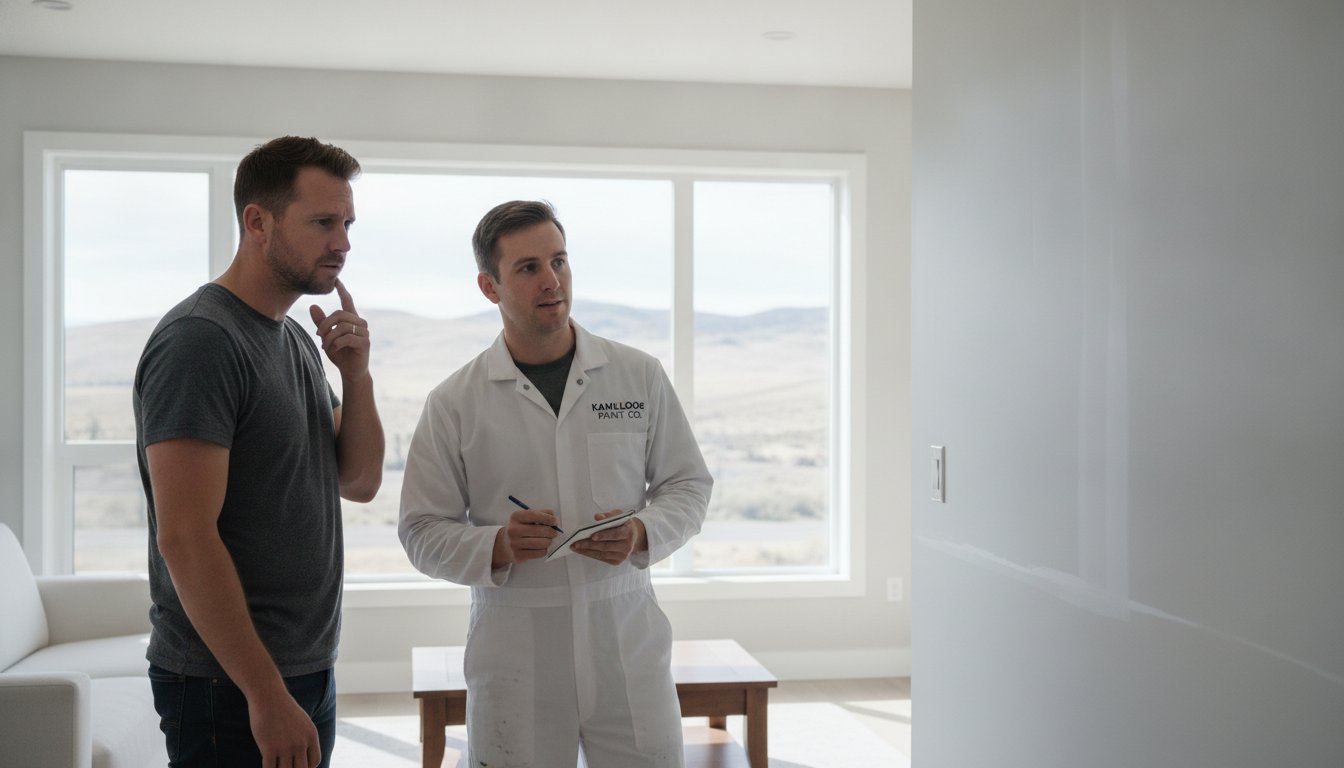
A poor paint job isn't just an eyesore; it's a breach of the professional standard you were promised when you invested in your home's transformation. Walking into a room and seeing drips, uneven lines, or visible lap marks can instantly turn your excitement into a heavy sense of dread. If you find yourself in this position, you're likely searching for what to do if you're unhappy with a paint job without causing unnecessary conflict. It's completely natural to feel anxious about confronting a contractor or worried that your financial investment has been wasted on a messy, poorly finished environment.
We believe that quality is a measurable standard rather than just a matter of opinion. You deserve a space that is revitalized through accuracy and attentiveness, not one that adds to your daily stress. In this guide, we'll show you how to move from emotional frustration to a technical assessment of the work. You'll learn the best ways to communicate effectively with your contractor and the steps required to ensure your home is finished to the high-tier standard you deserve. By following this professional resolution path, you can regain your peace of mind and finally see your vision brought to life with the precision it requires.
Key Takeaways
- Objective assessment using the "6-foot rule" helps you distinguish between technical defects and personal aesthetic preferences.
- Knowing what to do if you're unhappy with a paint job begins with documenting specific issues and presenting a clear punch list to your contractor.
- Reviewing your contract for workmanship guarantees is a vital step before navigating your rights or payment obligations in British Columbia.
- Professional remediation involves technical steps like sanding and re-priming rather than simply applying extra coats over a failed surface.
- Choosing a locally owned team with decades of experience ensures the intersection of accuracy and attentiveness for a high-tier finish.
Identifying a Substandard Paint Job: Is it a Defect or a Preference?
Determining the quality of a finished project requires moving past initial emotions to look at the work through a technical lens. It is common to feel a sense of disappointment if a color doesn't look exactly as you imagined under your home's specific lighting. However, a color choice you regret is a matter of preference, whereas visible brush marks, peeling, or uneven coverage are objective technical failures. Understanding the duties of a professional painter helps clarify that their role involves delivering a durable, uniform finish that adheres to industry standards.
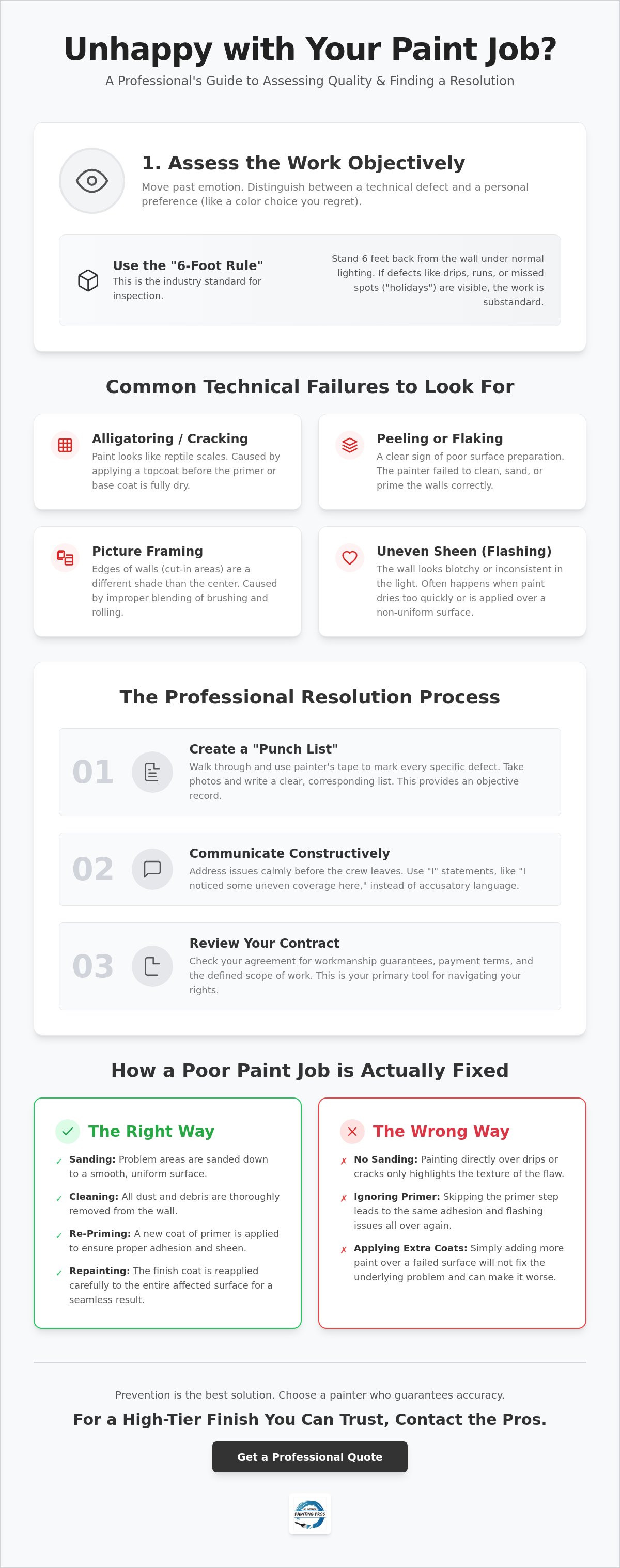
To assess the work objectively, professionals use the "6-foot rule." This industry standard dictates that a paint job should be inspected under normal lighting conditions from a distance of six feet. If you can see defects like drips, runs, or "holidays" (spots where the painter missed a stroke) from this distance, the work is substandard. Knowing what to do if you're unhappy with a paint job starts with this baseline assessment. If the flaws are only visible with a flashlight held an inch from the wall, they may fall within acceptable tolerances, but clear visible errors from across the room indicate a lack of accuracy and attentiveness.
While homeowners can perform this initial check, those in the process of purchasing a property may benefit from a more formal evaluation; for instance, A Premier Home Inspection provides expert assessments to help buyers identify potential issues before closing.
Visible Defects in Interior Painting
Technical failures often manifest in specific, recognizable ways. "Alligatoring" or cracking occurs when a topcoat is applied before the base coat has fully dried, creating a texture that resembles reptile scales. You might also notice "picture framing," where the edges of the wall near the ceiling or baseboards appear darker or lighter than the center. This happens when the "cutting-in" process isn't blended correctly with the rolled sections. Poor cutting-in itself is a major red flag; if paint has bled onto your trim or the lines at the ceiling are jagged, the artisan has failed to maintain the necessary precision for a high-tier result.
The Role of Proper Surface Preparation
In Kamloops, our environment plays a significant role in how paint behaves. Surface preparation is the most critical factor in ensuring a long-term result. If a painter fails to sand or prime the walls, the new layer will struggle with poor adhesion, eventually leading to peeling or flaking. Kamloops' low humidity can also cause paint to dry too quickly, leading to "flashing," which is an uneven sheen that makes the wall look blotchy. For exterior projects, professional stucco repair is a non-negotiable step. Applying paint over compromised stucco only masks structural issues that will inevitably cause the finish to fail. A skilled team understands that the tangible value of a job is built on the work done before the first drop of paint ever touches the surface.
The Professional Resolution Process: How to Talk to Your Painter
Addressing the situation with a calm, professional demeanor is the most effective way to protect your investment. If you are wondering what to do if you're unhappy with a paint job, the first step is to initiate a conversation before the crew packs up their equipment. Immediate feedback allows for real-time corrections while the technical team is still on-site. It's much easier to fix a run or a missed spot while the scaffolding is still in place and the paint is fresh, rather than scheduling a separate visit later.
Create a formal "punch list" to give the contractor clear direction. This is a detailed document that identifies every specific area requiring attention. Walk through each room with a roll of painter's tape and a notepad. Place a small piece of tape near every defect you identified using the 6-foot rule mentioned previously. Take high-resolution photos of these markers and write a corresponding description for each. This provides an objective record that moves the conversation away from vague feelings toward tangible technical requirements that must be met.
Constructive Communication Strategies
Use "I" statements to keep the dialogue productive and focused on the results. Instead of saying "You did a bad job here," try "I noticed some uneven coverage on this wall that doesn't seem to match the quality we discussed." Referencing the original quote or contract during this walkthrough ensures both parties are aligned on the scope of work. If the contractor seems unsure about how to achieve the desired finish, ask for a "sample fix" on one small area. This allows you to verify their technique before they attempt to redo an entire room, ensuring accuracy and attentiveness are restored.
When Communication Breaks Down
Sometimes, despite your best efforts, a contractor may be unable or unwilling to meet professional standards. Recognizing these signs early is crucial. If the painter becomes defensive or repeatedly fails to correct the same issues, it might be time to stop the work to prevent further damage to your surfaces. Understanding consumer rights in home improvement contracts can help you navigate these difficult moments with confidence. Stopping the work protects your home from further substandard application and preserves your ability to seek a better resolution.
Handling the final payment conversation requires transparency and a firm commitment to the agreed-upon standards. If the work is incomplete or technically flawed, you have the right to discuss a holdback until the project meets the required criteria. In many cases, bringing in a highly experienced house painter to provide a second opinion or a quote for remediation can clarify the path forward. Setting a clear, written timeline for the original contractor to rectify the work is the final step in understanding what to do if you're unhappy with a paint job. This structured approach ensures that your home is revitalized according to the high standards you deserve.
Understanding Your Rights, Contracts, and Payments
Your contract serves as the ultimate roadmap for resolving disputes. When you're deciding what to do if you're unhappy with a paint job, your first move should be a thorough review of the original agreement. A professional contract clearly outlines the scope of work, the specific materials to be used, and the standards for completion. Detailed estimates act as a shield for both the homeowner and the painting company, ensuring that expectations are grounded in written facts rather than verbal promises. Without these details, the resolution process often devolves into a series of misunderstandings that rarely end in the homeowner's favor.
In British Columbia, homeowners must be cautious about withholding payment entirely. While it's tempting to refuse payment until the work is corrected, doing so can expose you to a builder's lien. This legal claim against your property can complicate future sales or refinancing. Instead of a total refusal, focus on documenting the cost of the necessary repairs. Seeking a second opinion from a reputable Kamloops painting contractor provides you with an objective estimate of what it will cost to fix the deficiencies. This document is a powerful tool during negotiations because it replaces emotional frustration with market-based facts.
The Importance of a Written Warranty
A professional painting warranty is not a marketing gimmick; it's a commitment to accuracy and long-term results. Most reputable companies offer a labor guarantee that covers specific technical failures like peeling, cracking, or blistering within a set timeframe. It's vital to distinguish this from the manufacturer's warranty on the paint itself. A manufacturer's warranty only covers defects in the liquid product, which are rare. Most failures are caused by poor application or preparation. Handshake deals lead to the most common resolution disputes because they lack these specific protections. A written guarantee ensures the business takes responsibility for the tangible value of their work.
Negotiating a Partial Payment
If the relationship with the original painter has reached an impasse, negotiating a partial payment may be the most logical path forward. Calculate a fair deduction by determining the percentage of the project that remains substandard. Remember that labor accounts for 75-85% of the total cost on a typical interior project. If a room needs a complete redo, the materials have already been consumed, but the labor value is essentially lost. When negotiations stall, involving a third-party mediator or seeking advice on small claims limits can help you reach a resolution that respects your rights as a consumer. This approach prioritizes clarity and cost transparency over conflict.
Remediation: How to Fix a Poor Interior Paint Job
Fixing a failed project requires a transition from covering up mistakes to correcting them at the source. If you're wondering what to do if you're unhappy with a paint job, remember that simply adding another coat of paint rarely fixes the underlying problem. In fact, layering more product over a poorly prepared surface often highlights existing drips, textures, or adhesion issues. True remediation demands a technical approach that resets the wall to a professional baseline. This process involves a transparent assessment of where the previous application went wrong and a commitment to restoring the tangible value of your home.
Large wall spans are particularly susceptible to "flashing," where sheen inconsistencies create a blotchy appearance. This occurs when the paint is applied unevenly or the surface porosity varies. Correcting this involves more than just a quick touch-up. At BC Interior Painting Pros, our team approaches these botched spaces by identifying the root cause, whether it's poor technique or inadequate environmental controls. We prioritize long-term results over quick fixes to ensure the accuracy and attentiveness your space deserves. Our goal is to move the project from a source of anxiety to a source of pride.
Technical Steps for Paint Repair
The process begins with high-grit sanding. This specialized step removes "orange peel" textures, drips, and runs that a previous crew may have left behind. In the dry climate of Kamloops, paint can dry too quickly on the brush or roller, leading to visible lap marks that require extensive sanding to level. Once the surface is smooth, applying a high-quality primer is essential. Primer acts as a foundational bond, sealing old mistakes and providing a uniform surface for the new finish. When we re-do trim or cabinet painting, we use specialized finishes that offer superior durability and a level of accuracy that standard wall paint cannot provide.
Revitalizing the Environment
Living in a messy or poorly finished environment is a significant source of stress for many homeowners. There is a profound psychological impact when a homeowner finally sees a "mess" transformed into a professional finish. We focus on ensuring clean lines and accuracy in every corner and transition. We don’t just apply paint; we revitalize your home with a commitment to accuracy that restores your peace of mind. This transformation is not just about aesthetics; it's about providing the reliability and quality you expected from the start.
If you need a professional team to correct a substandard project and restore your home's interior, contact a skilled house painter to discuss your remediation options and schedule a technical assessment.
Prevention: Choosing a Painter Who Guarantees Accuracy
The most effective way to manage a project is to ensure it never requires remediation. While learning what to do if you're unhappy with a paint job is a necessary safeguard, the ultimate goal is to partner with a team that prioritizes accuracy from the first brushstroke. Vetting local Kamloops painters involves more than a quick glance at a website. You should examine galleries of recent work and read client reviews that specifically mention reliability and attention to detail. A locally owned company with 20+ years of experience brings a deep understanding of how our regional climate affects material performance, ensuring a finish that lasts.
A detailed, transparent quote is the most reliable predictor of a quality outcome. If an estimate is vague or focuses only on the final price, it often indicates that the contractor plans to cut corners on the essential work that happens before the paint is even opened. High-tier results are built on a foundation of thoroughness. When you choose a team that views their work as a professional service rather than just manual labor, you're investing in the long-term health and beauty of your environment. Our promise at BC Interior Painting Pros is a total transformation through attentive skill, providing the peace of mind that comes from a job done right.
What to Look for in a Quality Estimate
A professional estimate should read like a technical plan for success. It must include specific mentions of surface preparation steps, such as cleaning, sanding, and priming, which we've identified as the most critical factors for paint adhesion. Look for a clear breakdown of the high-end paint brands and specific finishes to be used in each room. Finally, a defined timeline for project start and completion protects your schedule and ensures the team is committed to your project without distractions. This level of clarity eliminates the ambiguity that leads to dissatisfaction later on.
The Long-Term Value of Professionalism
Investing in high-tier quality actually saves you money by extending the life of the paint job. A cheap application often requires a redo within a few years, whereas professional execution can remain vibrant and intact for a decade or more. Beyond the financial benefits, there's the intangible value of working with a skilled artisan team. You don't have to worry about messy workspaces or jagged lines; instead, you can enjoy the process of seeing your vision brought to life. We take pride in our long-standing history and our ability to revitalize spaces with precision and care. For those exploring more comprehensive luxury renovations, firms like projeco.com exemplify this commitment to high-end craftsmanship in every detail.
Ready for a job done right the first time? Get a free painting estimate in Kamloops today and discover how our commitment to accuracy and attentiveness can transform your home without the stress of a substandard result.
Restore Your Home’s Beauty with Precision and Care
A substandard finish doesn't have to be the final word on your home's transformation. By using objective standards like the 6-foot rule and maintaining clear, documented communication, you can navigate the stress of a poor result. Knowing what to do if you're unhappy with a paint job empowers you to demand the accuracy and attentiveness your property deserves. Whether you're reviewing a contract for workmanship guarantees or preparing for technical remediation, the goal remains the same: a space that revitalizes your environment and provides lasting peace of mind.
Choosing a team that values long-term results over quick fixes ensures your vision is brought to life correctly. With over 20 years of industry experience in Kamloops, our locally owned team focuses on delivering a high-tier finish backed by comprehensive interior and exterior warranties. We take pride in our history of reliability and technical expertise. Request Your Professional Quote from BC Interior Painting Pros to experience the tangible value of a job done right. You deserve a home that reflects your standards and a professional service that respects your investment.
Frequently Asked Questions
Can I refuse to pay a painter if I am unhappy with the work?
You shouldn't refuse payment entirely as it can lead to a builder's lien in British Columbia. Instead, document the technical issues and suggest a holdback of the final payment until the work meets the standards in your contract. This approach ensures you remain in a strong legal position while prioritizing a fair, professional resolution for both parties.
What is the "6-foot rule" for inspecting a professional paint job?
The 6-foot rule is an industry standard where a wall is inspected from a distance of six feet under normal lighting conditions. If drips, holidays, or uneven sheen are visible from this distance, the work is considered technically substandard. It provides an objective baseline for homeowners deciding what to do if you're unhappy with a paint job.
How do I fix paint drips or runs once they have already dried?
Dried drips and runs must be sanded down until the surface is completely level with the surrounding wall. Once the area is smooth, the artisan must apply a high-quality primer before re-applying the finish coat to ensure a seamless blend. Simply painting over a drip will only make the defect more prominent and visible from across the room.
Is it normal for new paint to look patchy or inconsistent (flashing)?
Inconsistent sheen or patchiness, known as flashing, is not a normal result of professional work. It typically occurs when the surface wasn't primed correctly or when the painter failed to maintain a "wet edge" during application. In the dry Kamloops climate, this requires specific technical attention to ensure the finish dries uniformly across large, open spans.
Do I have to pay for the paint if the labour was done poorly?
Materials are generally consumed once they are applied to your walls, meaning you are typically responsible for those costs. However, if the technical failure is severe enough that the paint must be stripped, the cost of materials can be factored into a negotiated settlement. Since labor accounts for 75-85% of most projects, there is usually significant room for negotiation.
How long should a professional interior paint job last in Kamloops?
A high-quality interior paint job in Kamloops should last between 7 and 10 years before requiring a refresh. Factors like sunlight exposure and wall traffic impact this timeline, but the accuracy of the initial surface preparation is the biggest predictor of longevity. Professional application ensures the finish remains vibrant and adheres properly through our regional seasonal shifts.
Can a new painter fix a bad job without stripping all the old paint?
Most substandard jobs can be remediated without a full strip unless there is a widespread adhesion failure. Sanding the existing layer to remove defects and applying a specialized bonding primer usually provides a stable foundation for a new finish. This approach restores the environment's beauty and accuracy without the excessive cost and mess of total removal.
What should I do if the painter refuses to come back and fix the issues?
If a contractor refuses to honor their workmanship guarantee, you should immediately document the defects with photos and written descriptions. Get a technical assessment and a quote for remediation from a reputable local team. This documentation is essential if you need to pursue mediation or small claims to recover your financial investment.


